Ethiopia halts new crypto mining permits as power capacity reaches limit

Add Mariblock as your preferred source to see more of our stories on Google.
This comes after the East African nation generated $55 million from Bitcoin mining over a 10-month period in 2024, primarily through agreements with 25 mining companies.
Ethiopia has stopped issuing new permits for electric power supply to data mining companies, effectively halting the expansion of cryptocurrency mining in the country.
The decision comes as the state-owned Ethiopian Electric Power (EEP) says it has reached its limit in meeting new demand.
Key quote
EEP CEO Ashebir Balcha announced:
“From our current assessment, access appears to be at capacity.”
Quick facts
The freeze follows a surge in interest from mining companies. Twenty-five firms already operate Bitcoin mining facilities in Ethiopia, attracted by low-cost tariffs and abundant hydropower. Nearly 20 more are on a waiting list.
EEP began selling power to crypto-miners in foreign currency to generate additional revenue, marketing it as a way to monetize “stranded power” — surplus electricity generated during off-peak hours.
In the past fiscal year, EEP exported nearly 7% of Ethiopia’s generated power, earning $338 million in foreign currency. Crypto-mining companies were among the largest contributors.
Power exports to Kenya and Djibouti are also growing, with Kenya requesting an additional 100 megawatts on top of the 200 megawatts it currently receives.
Key background
Ethiopia generated $55 million from Bitcoin mining over a 10-month period in 2024, primarily through agreements with 25 mining companies.
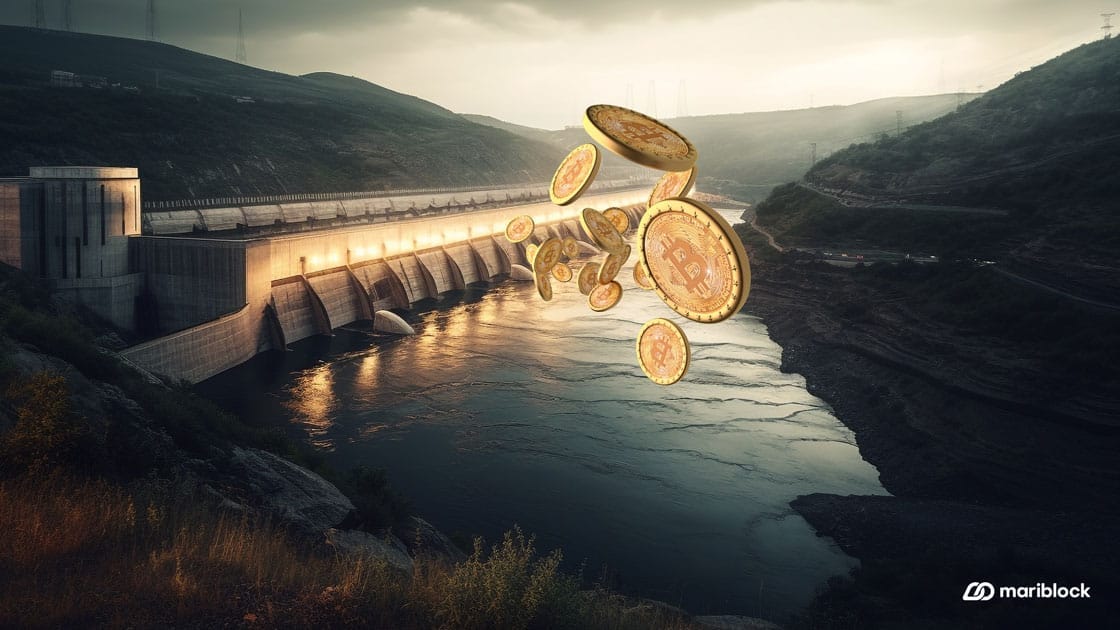
These firms rely on the country’s low-cost hydroelectric power, much of it from the Grand Ethiopian Renaissance Dam (GERD). The dam’s surplus output exceeds local industrial demand, and Bitcoin mining has provided a market for this excess.
However, the practice has drawn criticism for its high energy use and potential to strain local supply.
Why it matters
The suspension highlights the tension between Ethiopia’s efforts to monetize excess power and the limits of its current infrastructure.
EEP currently operates 20 power stations with a combined capacity exceeding 7,900 megawatts.
The Grand Ethiopian Renaissance Dam, scheduled for full commissioning within two months, will add more than 5,000 megawatts to the national grid.
Despite that, only half of Ethiopia’s population currently has access to electricity, despite national grid coverage spanning over 20,000 kilometers.