

Stablecoins, digital currencies pegged to real-world fiat, are being positioned as the solution to Africa’s notoriously expensive and slow cross-border payment infrastructure. On paper, the numbers are staggering: Sub-Saharan Africa moved over $200 billion in on-chain value between mid-2024 and mid-2025, with stablecoins accounting for 43% of that activity. The continent’s share in stablecoin transaction volume shows real growth in markets like Nigeria, Ghana and Kenya.
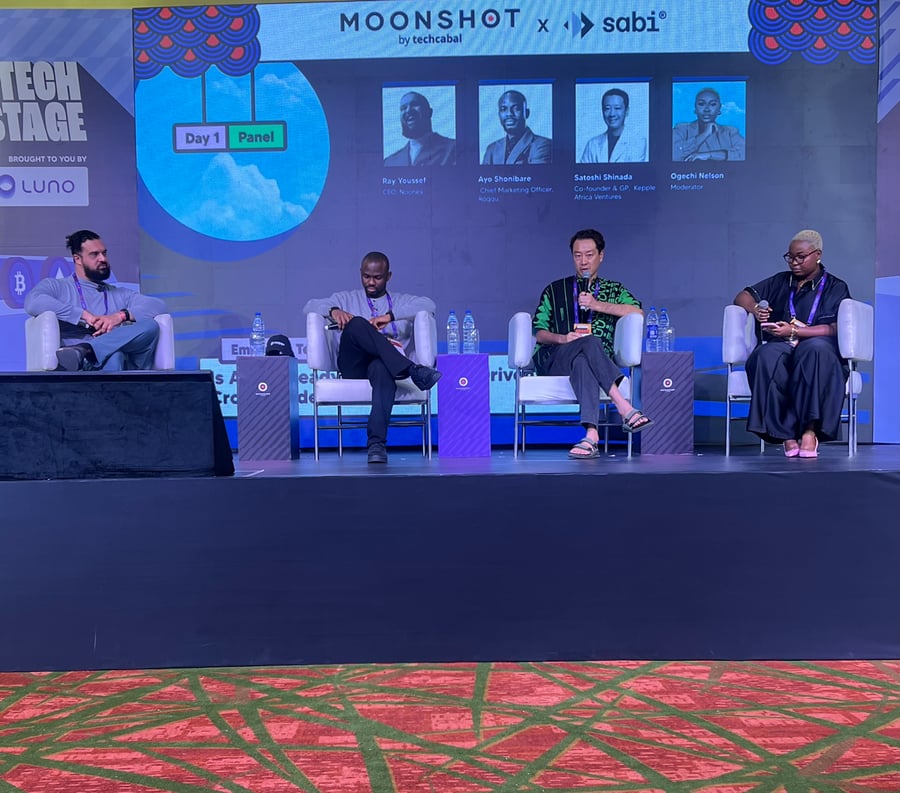
But moderating a stablecoin panel at Moonshot by TechCabal last week made me confront an uncomfortable truth: despite these impressive figures, there is a huge policy vacuum sitting between potential and scale. Africa moved $54 billion in stablecoins; now what?
The panelists shared their opinions on what it would take to turn that momentum into real, regulated systems that power everyday trade across the continent. First, Ayo Shonibare, Chief Marketing Officer of Roqqu, called for a shift in infrastructure. “Africa has historically been seen as consumers. The earlier we begin to build, the earlier we can shape what this technology becomes,” he said.
Ray Youssef, CEO of Noones, came in with the most provocative take of the session. “We’ve created our own financial system in Africa, now what’s left is the monetary system — the money itself — and that’s still under Western control,” he said. His point about stablecoins offering instant settlement and near-zero transaction costs is undeniable. But he clearly didn’t come to make friends with his take on regulation.
“Regulation has never kept anyone safe. FTX was regulated, and Binance was also regulated. All regulation does is make us poor because it keeps money from moving around.”
The room bristled. And honestly, so did I. Because while I understand his frustration with bureaucratic bottlenecks that exclude people from traditional finance, the reality on the ground is more nuanced. Payment processors and banks aren’t ready to plug digital asset rails into their systems yet. Traditional institutions have spent decades building trust with regulators and whether we like it or not, it is critical for moving beyond crypto-native users to actual mainstream adoption.
Satoshi Shinada from Verod-Kepple Africa Ventures offered what felt like the most pragmatic path forward. He argued for “compliance-first” stablecoins that can be institutionalized into payment ecosystems so everyday users simply use them. “By design, stablecoins are not volatile; they’re backed by reserves like government bonds. We need to institutionalize stablecoins. The best way to give credibility is to integrate them into the payment ecosystem so people just use them.”

Image source: Mariblock.
The panelists kept returning to the idea that regulation shouldn’t be about control; it should create the legal baseline that unlocks partnerships with banks, payment firms and remittance corridors. Without that framework, we’re stuck in a loop where the only people using stablecoins are people who already understand crypto.
Walking away from that panel, I’m certain stablecoins will transform cross-border trade in Africa. The numbers prove people want this. Stablecoins are already changing how traders move money, the remaining question is whether policy will turn that change into durable infrastructure for trade.
We have the talent, infrastructure and even the urgency, because trade within Africa is still slower and more expensive than trade into Africa and that’s absurd. What we lack is a unified approach. If we start there, cross-border trade on digital rails will finally become a reality for African commerce.