Sub-Saharan Africa now the third-fastest-growing crypto region, Chainalysis

Add Mariblock as your preferred source to see more of our stories on Google.
Nigeria led the region with $92.1 billion in value received over the 12-month period, nearly three times that of South Africa.
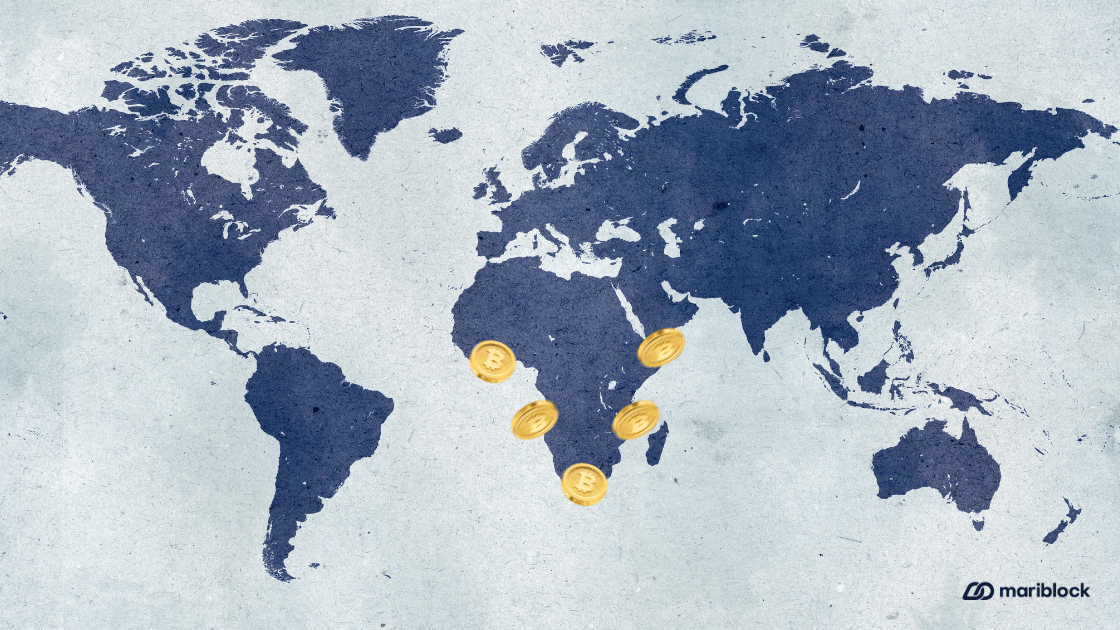
Sub-Saharan Africa (SSA) is now the third-fastest-growing cryptocurrency market globally, according to new data from blockchain analytics firm Chainalysis.
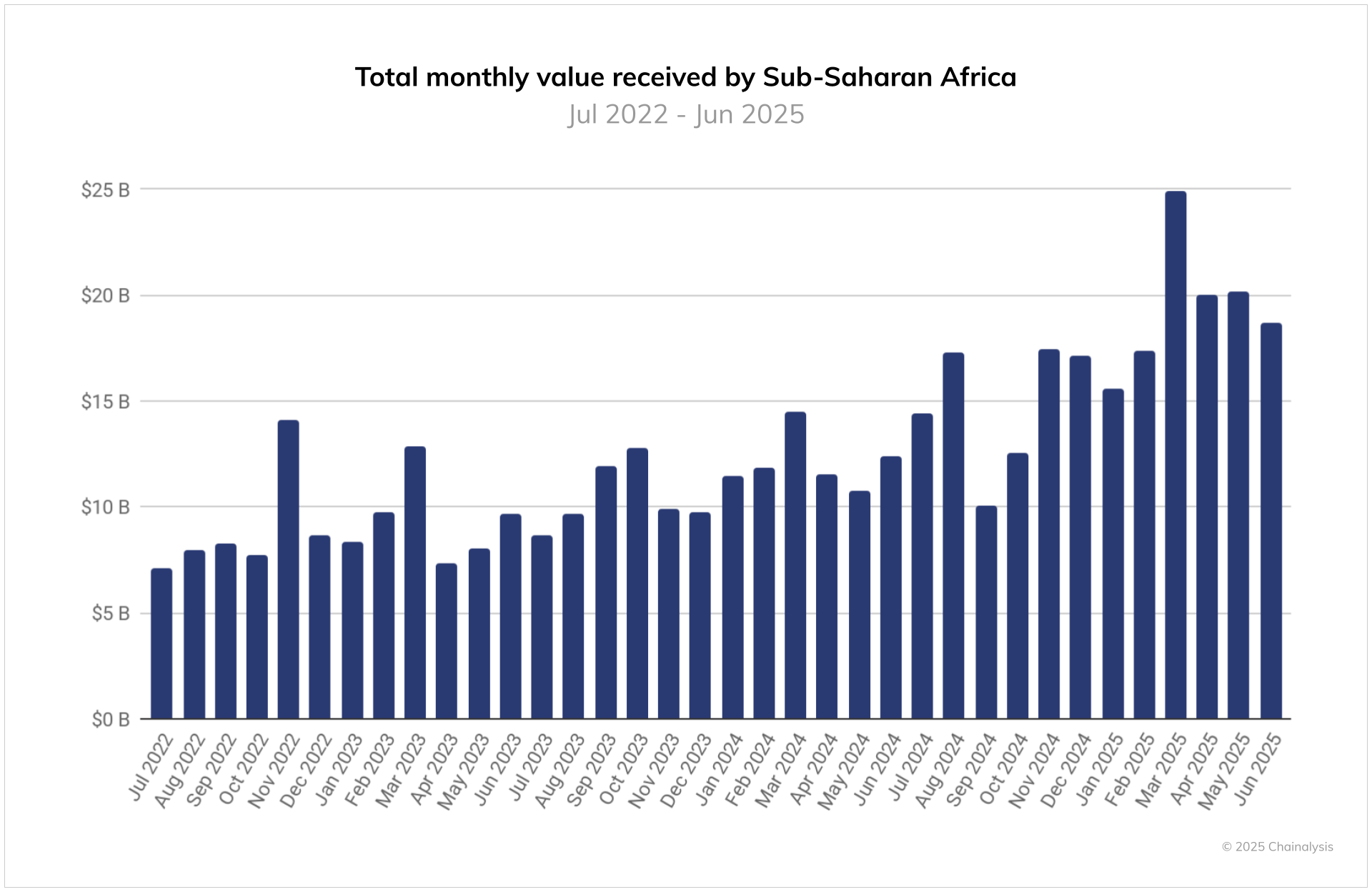
Between July 2024 and June 2025, the region received more than $205 billion in on-chain value, a 52% jump from the previous year, coming behind Asia-Pacific and Latin America.
Quick facts
According to the report, the sharpest spike came in March 2025, when SSA’s monthly transaction volume neared $25 billion, an outlier in a month when most other regions saw declines.
Nigeria led the region with $92.1 billion in value received over the 12-month period, nearly three times that of South Africa.
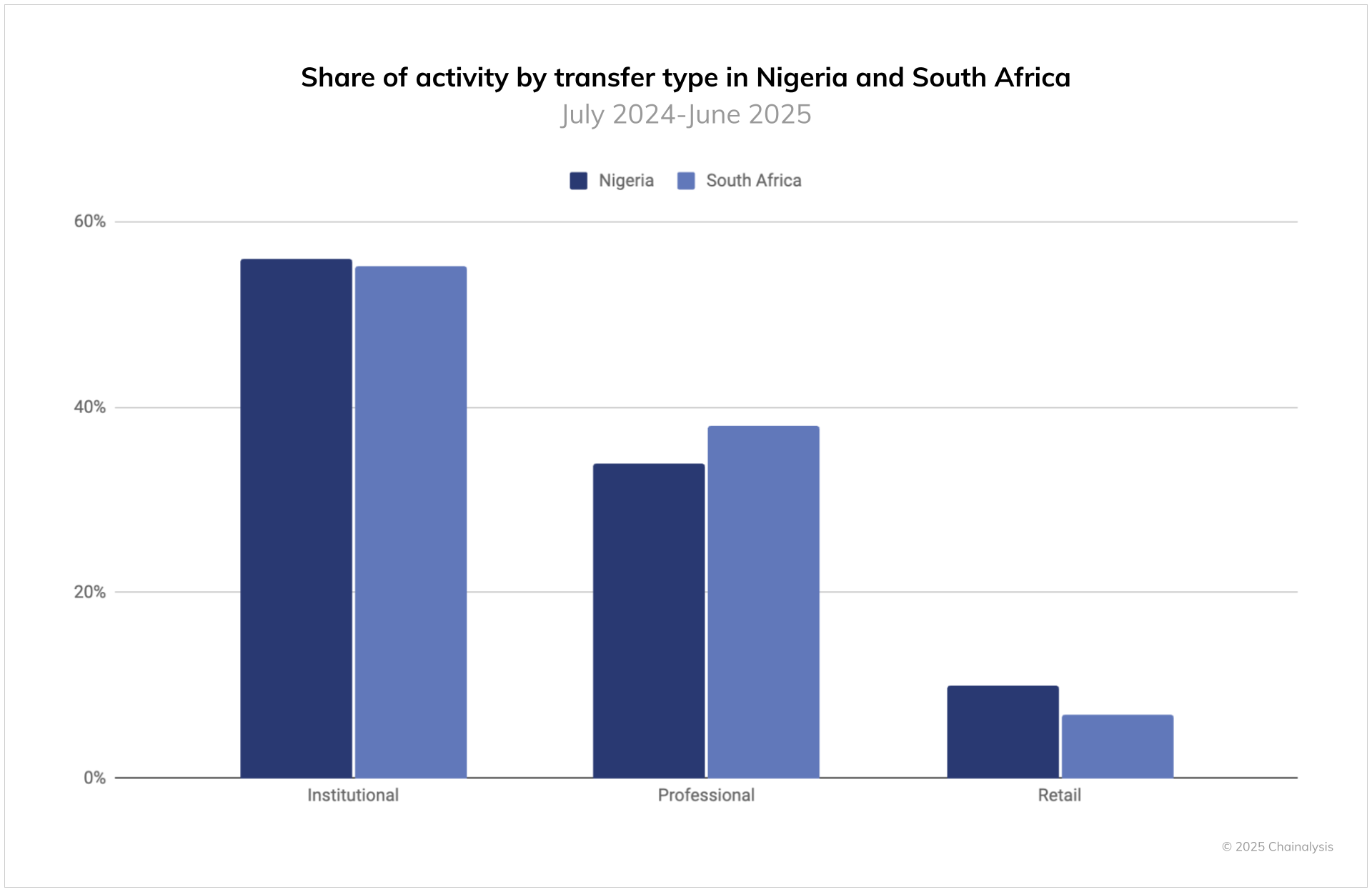
Transfer-size analysis shows a larger share of smaller transfers under $10,000 in SSA than the global average, highlighting strong retail use alongside larger institutional flows.
South Africa ranked second with institutional activity supported by its advanced regulatory framework.
Ethiopia, Kenya, and Ghana completed the regional top five by transaction volume.
Regional trading patterns
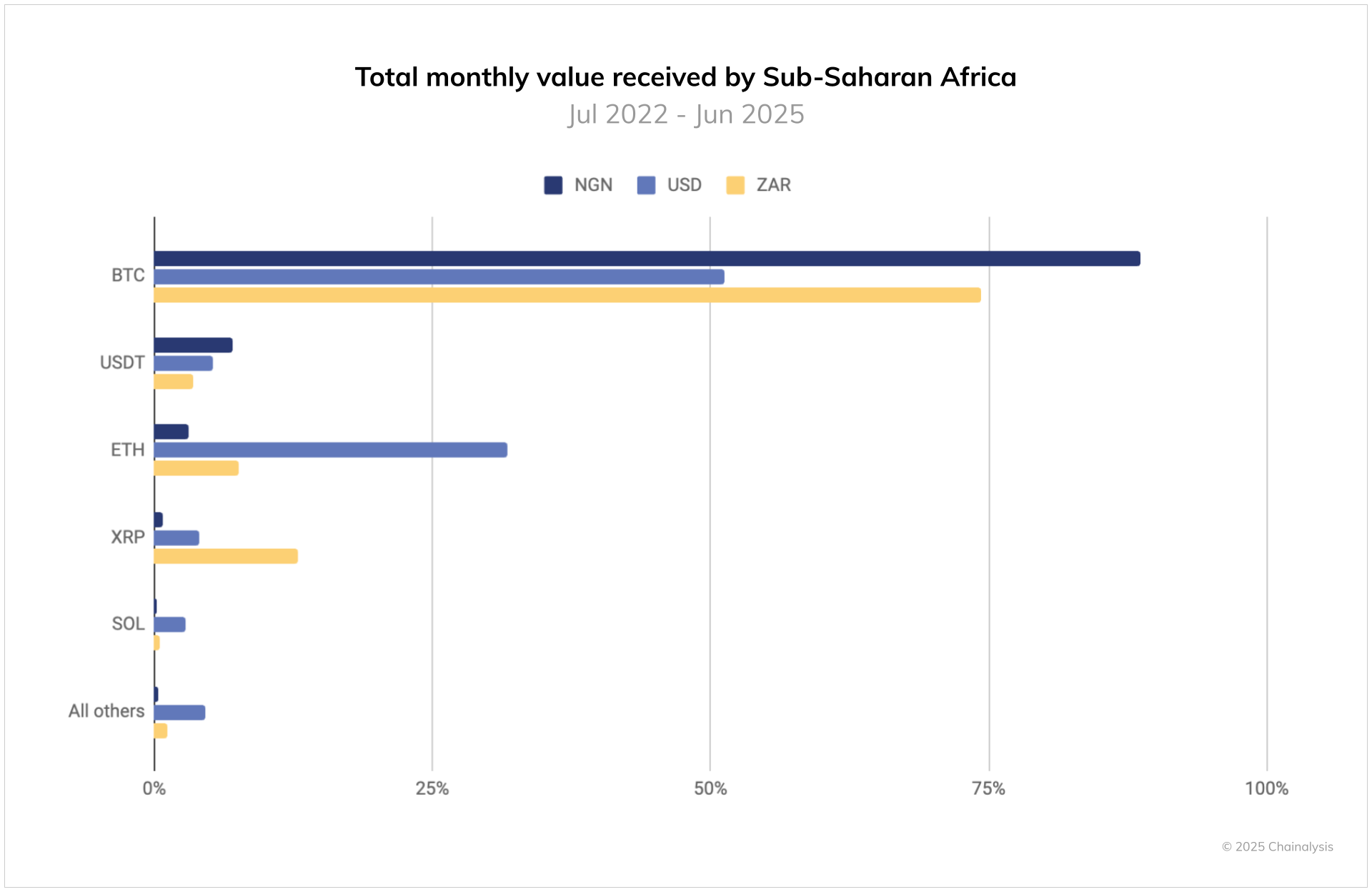
Bitcoin serves as the primary entry point for African crypto users, representing 89% of crypto purchases in Nigeria and 74% in South Africa.
These percentages far exceed the 51% Bitcoin share seen in USD-denominated purchases globally, the report said.
According to Chainalysis, the preference suggests Bitcoin is viewed as both a store of value and default crypto exposure in volatile currency environments.
Chainalysis notes the analysis only captures centralized exchange activity, excluding informal market transactions, peer-to-peer trading, and over-the-counter transfers that likely represent significant additional volume across the region.
Stablecoin figures
Chainalysis finds frequent multi-million dollar stablecoin transfers linking Africa, the Middle East and Asia, supporting sectors such as energy and merchant payments.
Nigeria’s crypto activity is driven by inflation and restricted foreign currency access, with stablecoins serving as dollar substitutes.
Zoom out
Chainalysis attributes much of Sub-Saharan Africa’s crypto surge to Nigeria, where a sudden naira devaluation in early 2025 pushed many toward digital assets.
With dollars scarce, many turned to stablecoins as the closest thing to hard currency they could actually access.
Stablecoins now account for 43% of the region’s total crypto transaction volume, showing how deeply they’ve become woven into everyday financial survival.