


Do you want to know about the latest blockchain and digital assets development in Africa? You can have this newsletter sent to your inbox every Saturday.
Fresh off a $3.75 million token sale, blockchain company Empowa is looking to fix Africa’s broken home loan market

Freepik; Ifeoluwa Awowoye
The big story: Blockchain-based real estate project Empowa recently completed a public sale for its EMP token, raising $3.75 million, Mariblock learned.
- Empowa is looking to fix Africa’s broken home loan market for middle- to low-income earners.
- The company said it has conducted a successful pilot in Mozambique, increasing the country’s home loan market by 5%.
- Context: Mozambique’s home loan market is tiny. There were only 600 retail mortgages before Empowa started working in the country.
What they’re saying: “In the developing world, we know that 70% of income is informal. So immediately we know that mortgage that doesn't work,” CEO Glen Jordan told Mariblock.
- “Mortgage [is] a product that suits the bank's needs, not the customer’s. And all we’re doing is just transferring that around and saying, let’s design a product that meets the customer's needs.”
- For Empowa, home loans based on the lease-to-own model are what customers need because it provides a way to look forward to future earnings rather than history.
- “[It’s not that] they [customers] haven't got money; it doesn’t mean they can’t afford it,” Jordan said. “But they struggle to prove it. So [what] if we can design a product that enables us to look forward?”
How it works: Empowa allows accredited investors to buy NFTs/tokens representing shares in affordable housing projects.
- The project primarily works with real estate companies to develop the properties and onboard buyers/lessees.
- The payments by residents are distributed back to the NFT/token holders as rewards.
- Empowa makes money by charging a spread on the cost of capital from investors.
Why blockchain: the platform uses smart contracts to ensure transparency and security in the investment process.
- Blockchain also allows investors to track the progress of housing projects in real-time, Jordan said.
Of note: Empowa isn’t the only company trying to disrupt the real estate investment market. While there have been unsuccessful attempts across the blockchain and traditional spheres, there’s a belief that there is an opportunity here (See Oluwaseun’s discovery below).
- In Nigeria, Fibre briefly launched a product called Secure to offer small-ticket retail investment opportunities in real estate (no blockchain play).
- HouseAfrica, which recently raised $400,000, started out attempting to tokenize real estate investing. The company has since pivoted to running a blockchain-based land registry service called Sytemap.
Discovery by Oluwaseun: While editing this newsletter, I sought additional information to make this richer.
- I discovered that RedSwan CRE, the American marketplace that has reportedly tokenized $2.2 billion in real estate assets, now has a Nigerian operation.
- Apparently, the company opened in Nigeria nearly one and a half years ago.
- There are currently properties listed on its marketplace
- I’ll be digging deeper to find out more. I can tell there’s a lot to unpack here. Watch out!
Crypto exchange Roqqu secures regulatory approval in South Africa

Roqqu
Topline: Nigerian crypto exchange Roqqu announced its expansion into South Africa after securing the regulatory go-ahead.
- The approval allows Roqqu users in South Africa to deposit and withdraw funds in local currency, the South African rand.
What we don’t know: Roqqu didn’t specify the South African body that gave the regulatory go-ahead.
- The company didn’t immediately respond to Mariblock’s request for comment.
What we know: As part of a grander move to regulate the crypto industry, South Africa’s Financial Sector Conduct Authority started requiring digital assets companies to secure a license in 2023.
- Companies already operating in the country must apply for a license between June 1 and Nov. 30, 2023.
Zoom out: South Africa’s Financial Intelligence Center added crypto businesses to the list of accountable institutions under the Financial Intelligence Act in 2022, months after classifying crypto assets as financial products.
- This means crypto companies are expected to provide anti-money laundering and countering the financing of terrorism (AML/CFT) reports.
- Last year, The country’s central bank also authorized financial institutions to serve crypto companies in a bid to uphold “financial integrity.”
Adaverse invests in blockchain-powered supply chain company

Chekkit; Mariblock
The news: Chekkit, a blockchain-based platform that provides end-to-end monitoring of pharmaceutical products, recently secured a seven-figure investment led by Cardano’s Adaverse.
Quick facts: the Nigeria-based company gathers product data from plant to patient, offering said data as intelligence to brands while rewarding consumers who help verify the products.
What they’re saying: “We use the blockchain for securing the unique identifiers we generate for products or ingest from our ERP partners to prevent the duplication of serial codes and to also secure consumer personal data,” said CEO Dare Odumade.
Essential context: Nigeria’s National Food and Drugs Administration Control (NAFDAC) promised to build a pharmaceutical traceability system across the Nigerian pharmaceutical supply chain by 2024.
- It’ll be interesting to watch how Chekkit benefits from this drive.
Bitnob taps Zebedee to allow gamers earn bitcoin

Ifeoluwa Awowoye
The news: African gamers can now earn bitcoin when they play games on the Zebedee platform, thanks to a partnership with Bitnob, the African bitcoin exchange.
The details: Zebedee, a United States-based Bitcoin payments company, uses the Lightning Network to enable developers to reward users in real money.
- For example, game developers can replace points with satoshis, the smallest unit of a bitcoin.
- Through this partnership, African gamers on the Zebedee platforms can now convert their bitcoin earnings into local fiat through Bitnob.
Follow the money: The bitcoin rewards are “essentially a revenue share between the game studio and the player,” according to Zebedee.
- Beyond games, the American company provides social networks, communities, etc., payment tools to build engaged audiences via bitcoin rewards.
Kenyan banks are reportedly closing accounts that have interacted with crypto
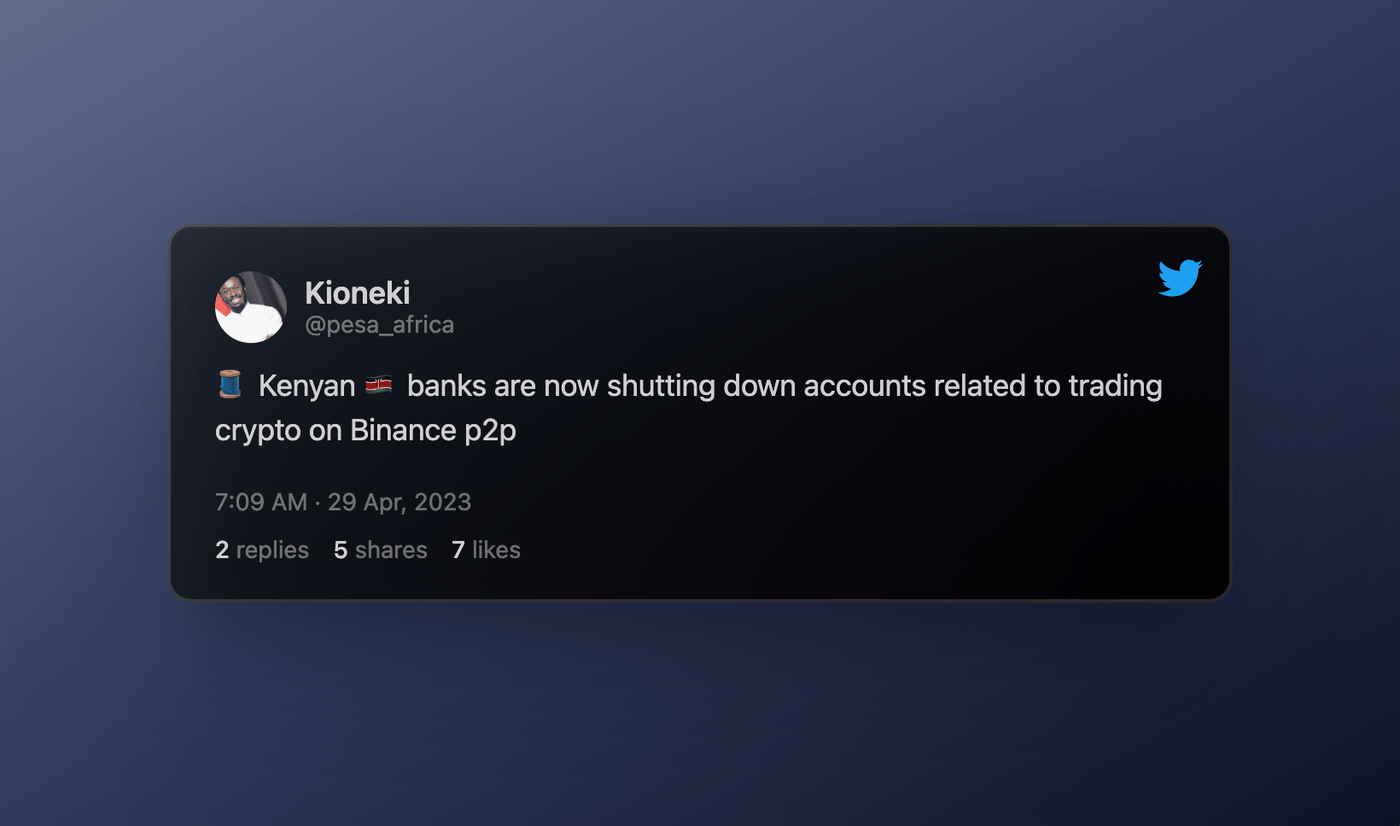
Banks in Kenya have started shutting down accounts that transacted with the Binance peer-to-peer exchange, according to Michael Kimani, the founder of the Blockchain Association of Kenya.
What we don’t know: It’s unclear why Kenyan banks are suddenly hostile toward crypto users — given the backdrop of recent regulatory developments in the country.
What we know: In 2021, some Kenyan banks reportedly cautioned customers on the use of cryptocurrency, citing the Central Bank of Kenya’s (CBK) 2015 circular, which clarified that cryptocurrencies aren’t legal tender.
- CBK Governor Patrick Njoroge has long maintained that digital currencies pose risks to financial stability.
- Still, as Mariblock reported last year, the CBK and four other financial regulators started considering developing a regulatory framework for crypto.
- Legislators in the East African country are working on a bill to introduce taxes on crypto trading.
State of fiat
ℹ️ Editor’s note: This story is part of Mariblock’s “State of Fiat” coverage. Digital assets such as bitcoin are seen as competitors to central bank money. We consider it worthwhile to inform our audience of the state of their local currencies.
Zimbabwe to launch a gold-backed CBDC
Getty Images via Canva; Ifeoluwa Awowoye
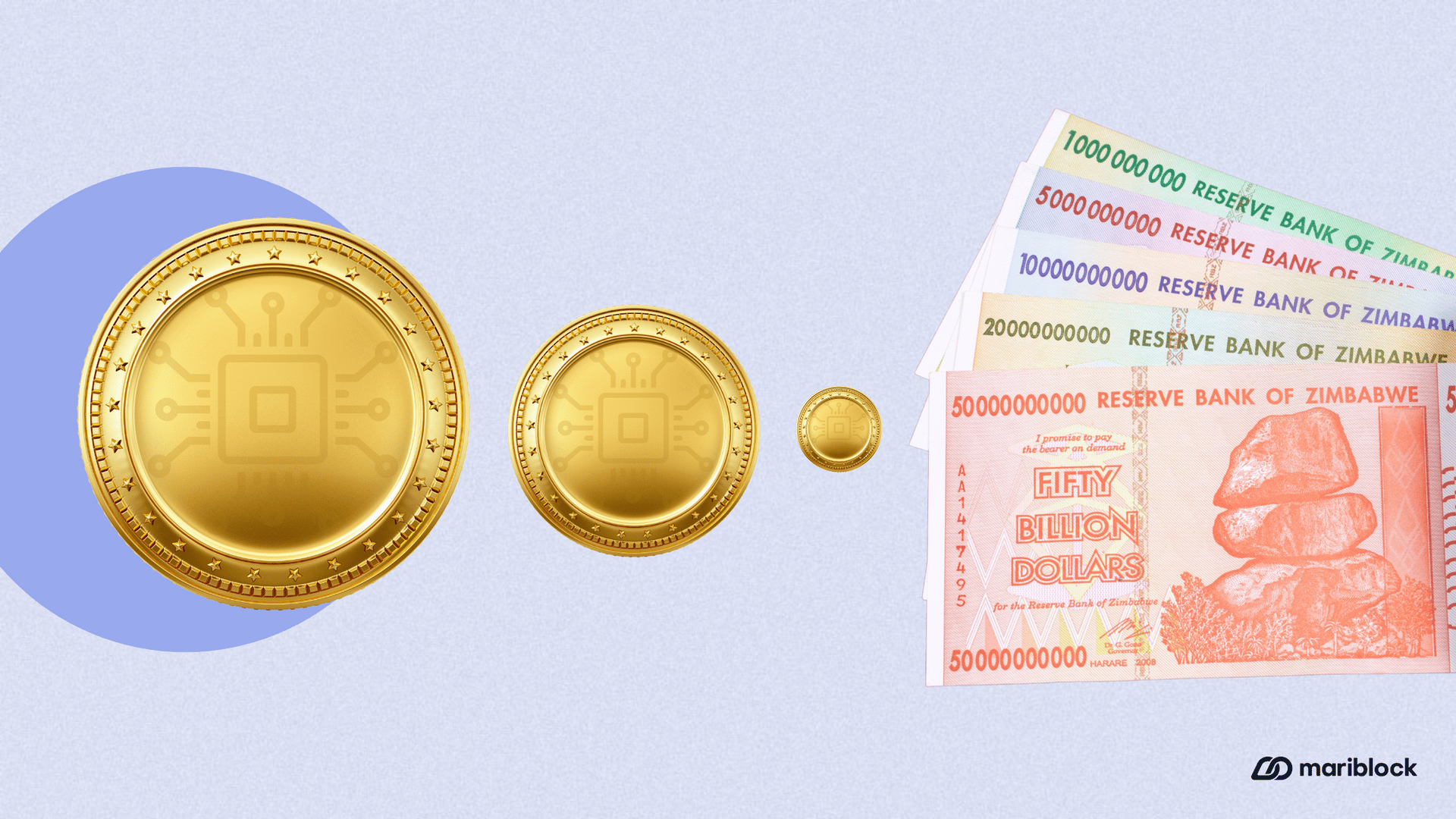
Zimbabwe plans to launch another measure to fight its hyperinflation. This time, it is a central bank digital currency (CBDC) backed by the country’s gold reserves.
What they’re saying: “What we have noticed is that demand for foreign currency, apart from being driven by the need to import goods and services in Zimbabwe, is also viewed as a store of value,” said John Mangudya, the Reserve Bank of Zimbabwe governor.
- “We are addressing the demand for a store of value by increasing the number of gold coins in the market so that we manage that demand.”
Of note: The country’s gold reserves are currently valued at $22.967 million, with an expected 14% increase at the end of the year.
- A member of the country’s monetary policy committee said the government would need up to $100 million worth of gold to make the CBDC development happen.
Nigeria’s failed currency swap deal
Getty Images via Canva; Mariblock
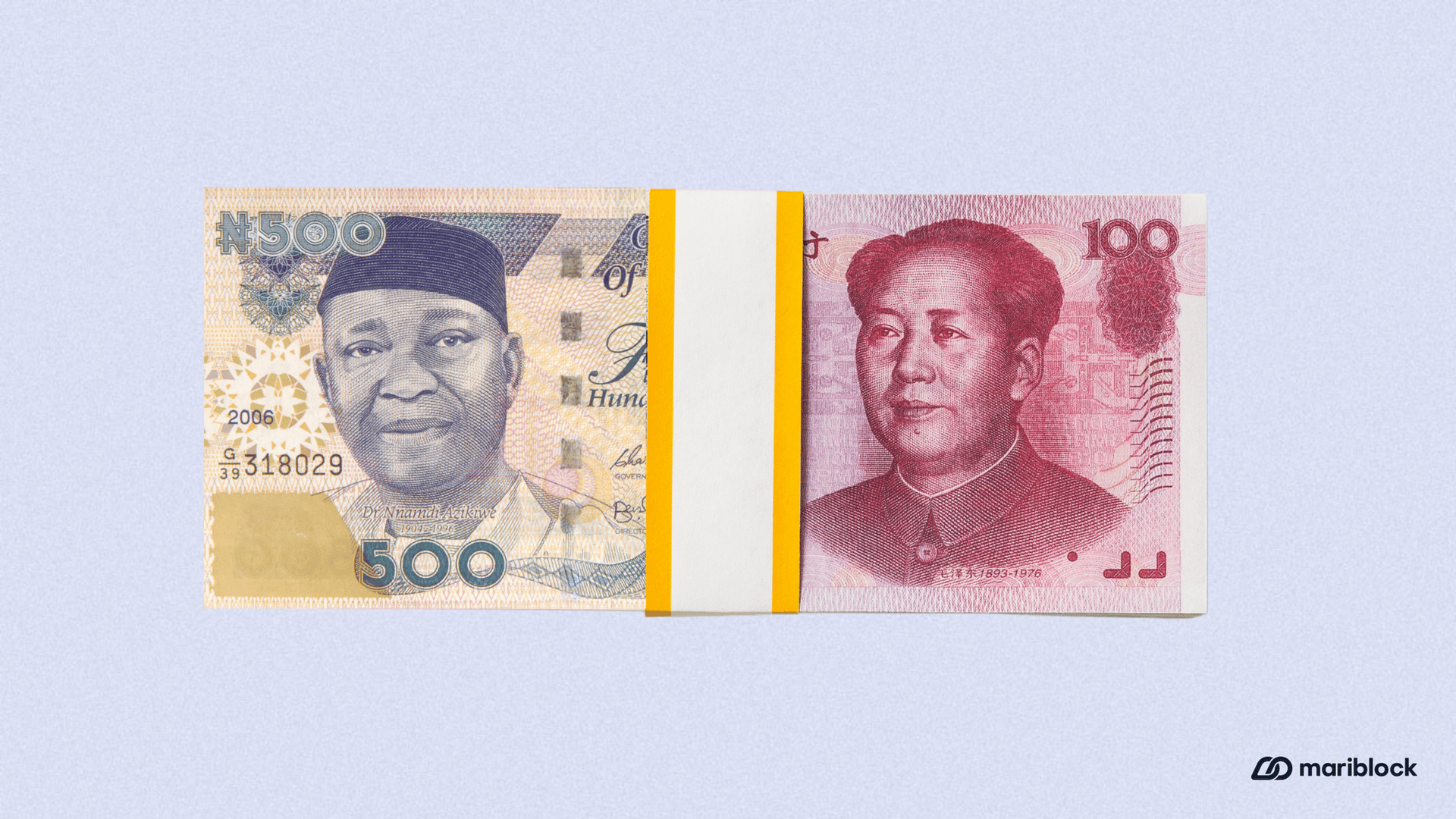
The Nigerian-China currency swap deal, signed in 2018, has failed to achieve its intended purpose of easing the pressure on the country’s exchange rate and external reserves.
Critical data: Exchange rate pressures have remained persistent since the agreements.
- The naira-yuan exchange rate depreciated to N66.70 in April, compared to N48 per yuan in 2018.
- The naira also fell against the dollar from N305 in 2018 to N460 a dollar in April 2023.
- A currency swap is an agreement between two parties to exchange cash flows in different currencies at some predetermined rates for a specified period.
Expert opinion: Taiwo Oyedele, head of tax and corporate advisory services at PwC Nigeria, told the Nigerian newspaper Businessday that the bilateral currency swap policy was meant to bypass the use of a third currency, particularly the USD.
- “The implementation has so far been a challenge due essentially to the trade imbalance between Nigeria and China. While we import so much from China, we do not export nearly as much, which in fact, has been on the decline in addition to the relative instability in the value of the naira,” he said.