


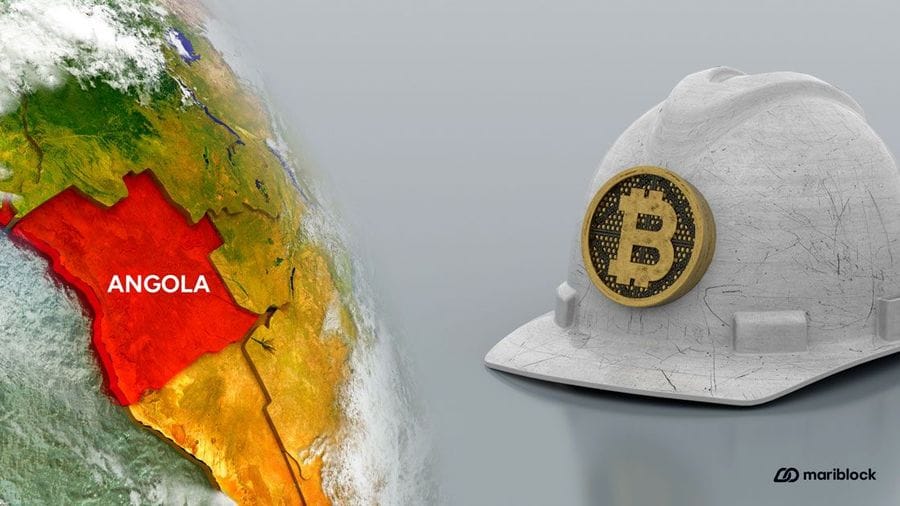
Q&A: Angola can become a hub for cryptocurrency mining in Africa
Assets: Getty Images; Tomas Griger | Design by Ifeoluwa Awowoye for Mariblock.
Topline: Angola is one of Africa’s leading countries for cryptocurrency mining. The country ranked third amongst others with the most crypto-mining operations on the continent in 2021. (Details)
- However, that may be about to change with the Angolan government planning to regulate cryptocurrencies and ban crypto mining operations. The government of Angola is preparing a bill to this effect.
- Mariblock asked Manuel Euclides, founder of the crypto exchange Yetubit and Bitcoin Angola, a crypto-focused news blog and community of bitcoin enthusiasts, about the regulations and present state of the crypto ecosystem in Angola.
The details: Here are key highlights of the conversation.
- Chinese, Vietnamese and Israeli individuals are responsible for most of the crypto-mining operations in Angola.
- There is currently no taxation for crypto companies because there is no licensing regulation for the industry. As a result, the government deems all mining activity illegal.
According to Euclides, some of the reasons the government cites for wanting to ban crypto mining include the security of the national energy system and environmental protection.
- The cryptocurrency market in Angola has witnessed significant growth in recent years because Angolans are increasingly using digital assets to hedge against inflation and purchase goods and services.
- Euclides believes that if the government’s plans succeed, the mining sector will be non-existent, virtual assets will suffer, and the government will lose out on tax revenue from crypto enthusiasts and mining companies in the country.
Report: Crypto leads biometric fraud in Africa; digital identity offers hope
Design by Samuel Ojo for Mariblock.
Topline: Crypto is responsible for the highest biometric fraud rate of all industries in Africa. However, the solution might be digital identity systems (Worldcoin? 🤔). That’s according to a new report from Nigerian identity company Smile ID. (Details)
- This comes amidst controversies around digital identity (DID) resulting from the launch of Worldcoin.
Quick facts: In its “State of KYC in Africa” report, Smile ID said 15% of all biometric frauds its system witnessed in the first half of 2023 were in the crypto space.
- According to the company, these frauds are rampant in cases where the crypto and the remittance industries exclusively rely on textual checks such as government-issued ID cards.
- Solution: Smile ID says biometric digital identity systems can help prevent fraud and establish trust, as they are more challenging to fake than traditional text-based ID methods.
Report highlight: “By incorporating biometric verification methods, businesses can enhance their security measures, better detect fraudulent activities, and protect their platforms and users.
- ”As the payments and remittances industries continue to grow in Africa, integrating biometric solutions will be crucial for maintaining trust and ensuring the safety of transactions within these sectors.”
The tilt: The notion of DID systems in Africa has become unpopular following the launch of Worldcoin, a project founded by ChatGPT founder Sam Altman.
- Worldcoin set out to build a decentralized and global proof-of-personhood digital identity network relying on biometric data from iris scans. The project uses these scans to issue unique digital IDs on a blockchain for transparency.
- However, after Worldcoin’s launch, security, and privacy concerns have trailed its biometric digital ID drive.
- After making a solid start in Kenya, the government of Kenya suspended its activities over security, authenticity and legality issues around the company’s activities in the country.
Bybit partners with South African crypto risk assessor to integrate crypto trading for users
Design by Ifeoluwa Awowoye for Mariblock.
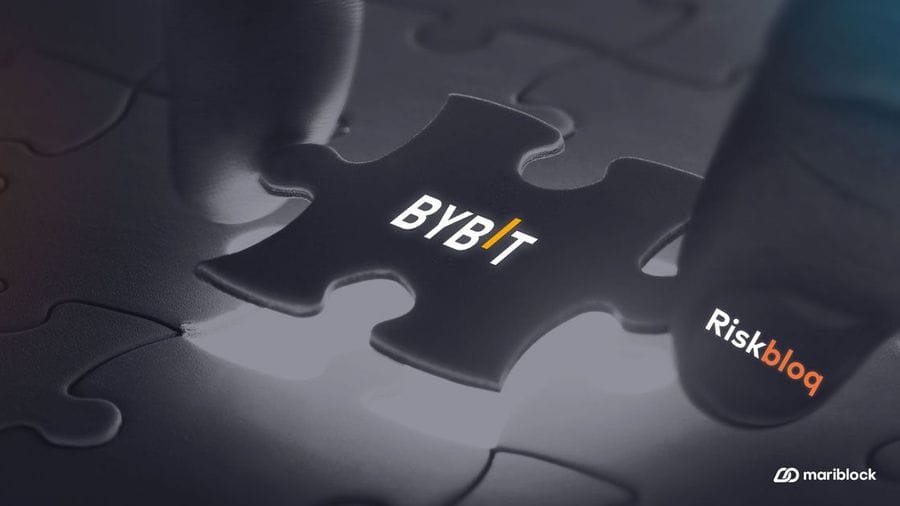
Topline: Global cryptocurrency exchange Bybit recently partnered with Riskbloq, a South Africa-based crypto analytics firm in which the latter will integrate features that let users trade or invest in digital assets directly from its platform. (Details)
Quick facts: Riskbloq uses on- and off-chain sources to provide risk profiles for more than 15,000 digital assets for investors.
- While users can now buy and sell cryptocurrencies on Riskbloq, the company is not necessarily pivoting into exchange services.
- CEO Nzwisisa Chidembo emphasized that the goal of the partnerships is to help investors act on the insights they find on Riskbloq seamlessly.
Essential quote: “We started this journey of trying to discover who we can potentially partner with to assist our investors complete that last stage of their journey,” Chidembo told Mariblock.
- “And so we partnered up with Bybit to allow our users basically … find the liquidity that they actually need to execute on a specific trade.”
Key background: Late last year, the South African Financial Sector Conduct Authority (FSCA) in South Africa declared crypto as a financial product, a move that marked a new phase for crypto regulations in the country.
- In August, the FSCA mandated all crypto exchanges in the country to get government-issued licenses before the end of the year.
- Riskbloq’s interactions with its users have shown that institutional investment funds are particularly picking up more interest in real-world assets tokenization, Chidembo added.
Coming soon: Mariblock Roundtable

Mariblock
Topline: Mariblock’s top priority is fostering impactful conversations that drive the advancement of the African blockchain and digital assets space.
- We see stakeholder engagement as a significant part of that.
- Mariblock Roundtable will bring builders, talents, investors, enthusiasts and regulators around the continent together to engage in discussions that move the needle for the industry.
- This won’t be a crypto/blockchain education series.
- We’re open to partnerships. Do reply to this email if you’d like to learn more.
Catch up
🇰🇪 Cardano’s builder launches a two-month blockchain training program in Nairobi (Mariblock)
🇦🇴 Expert warns that banning bitcoin mining could hurt crypto adoption in Angola. (Mariblock)
🇳🇬 eNaira CBDC set for cross-border and wholesale use-case upgrade. (Mariblock)
🌍 Real estate tokenization can help build wealth in Africa: RedSwan’s CEO (Mariblock)
🇳🇬 Patricia is converting customer assets into ‘Patricia tokens’ (Techcabal; Techpoint)
🌍 Opinion: Commodity tokenization is the economic aid Africa needs (Cointelegraph)
🇿🇼 Zimbabwe’s central bank close to introducing gold-backed digital tokens into retail (Cointelegraph)
🇿🇦 Crypto as inflation hedge: South Africa’s innovative approach to digital assets (Forbes Africa)
🌍 How bitcoin is having a real impact in the developing world (Unchained)
I’d love to hear from you ✍🏾
What are your thoughts about this newsletter?
What are we doing well, and what should we improve on?
Hit the reply button, and let’s talk — even if it’s a reaction to any of the stories covered here.
I look forward to hearing from you.
That’s it for this week.
See you next week.
Cheers,
Ogechi.