


Do you want to know about the latest blockchain and digital assets development in Africa? You can have this newsletter sent to your inbox every Saturday.
Paxful resumes operations after a month-long suspension

Paxful; Ifeoluwa Awowoye
Topline: Bitcoin company Paxful has announced that its peer-to-peer (P2P) marketplace is back online after initially shutting down in April.
What was said: the Paxful team wrote in a blog post:
“After a month away, we’re happy to announce that [the] Paxful marketplace is back online. In early April, we faced a difficult decision to temporarily suspend the marketplace to protect all of our customers and Paxful’s future.”
What we know: In the resumption blog post titled “We’re back,” the Paxful team noted that the staff has been working for the last month to bring the market back online without compromising the security and safety of their funds.
- Co-founder Ray Youssef cited reasons, including regulatory uncertainties and critical staff departures.
- Youssef also said fellow co-founder Artur Schaback had sued him for wrongful termination, among other reasons.
- At the time of the suspension, Youssef assured users of the safety of their funds while advising them to withdraw the funds into self-custody wallets.
- Mariblock got hold of a Slack message from Youssef, expressing uncertainty over the company’s ability to keep staff employed at the time, explaining that most of the company revenue comes from the P2P marketplace.
What we don’t know: It remains unknown whether the issues that led to the previous suspension of the P2P platform have been resolved.
- For instance, the United States’ regulatory situation remains pretty much the same. The lawsuit also appears to be active.
- Paxful did not respond to Mariblock’s request for comments.
Of note: Youssef stepped down as the CEO of Paxful shortly after the suspension.
- Due to the unresolved conflict between the founders, Paxful is reportedly being run by a new custodian who serves as one of the company’s three directors.
Crypto adoption is strong in Africa. But what kind of adoption is it?

From our lead editor Oluwaseun
Topline: Last week, the pseudonymous crypto sleuth, ZachXBT, called out a crypto influencer for dumping a token called HODLR.
- This led me to start digging into CT NG — short for “crypto Twitter, Nigeria” — dominated by a number of influencers who shill pump and dump tokens.
- They’re part of a gambling-like crypto market niche called degen — short for degenerate.
- I spent nearly two hours listening in on one of their Twitter spaces. The sentiments I heard were disturbing and gave context to many of the “crypto is scam” comments I receive when I speak to people about the industry.
Why it matters: This cohort of influencers has large followership, and I believe they’ve been the gateway into crypto for many, who have most likely gone on to lose money.
Watch out: This week, the Mariblock Insight team (yes, that’s our research and analysis arm) will be digging into CT NG for a deeper look at what happens on the inside.
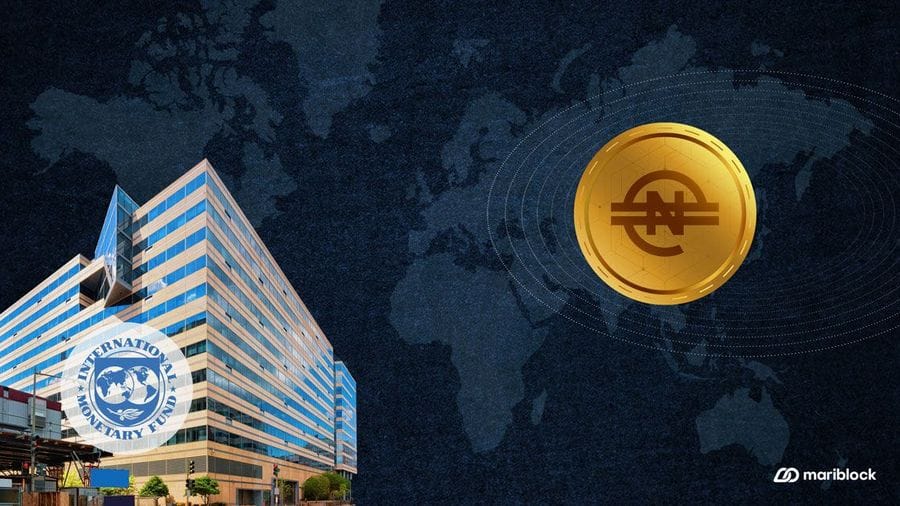
The IMF thinks retail CBDCs are potentially risky
IMF; Ifeoluwa Awowoye
Topline: The managing director of the International Monetary Fund (IMF), Kristalina Georgiva, has expressed concerns over the global adoption of central bank digital currencies (CBDCs).
Current posture: At the Milken Institute Global conference on May 1, Georgiva said the widespread use of retail CBDCs might pose a new risk to financial institutions.
- She added that the wholesale CBDCs are better than retail and urged countries to stick to less risky CBDC options.
What was said: “We think the wholesale CBDCs can be put in place with fairly little spaces for undesirable surprises, whereas retail CBDCs completely transform the financial system in a way that we don’t quite know what consequences it could bring,” she said.
Of note: Retail CBDCs are state-backed virtual currencies issued by central banks for use by consumers and businesses.
- Wholesale CBDCs are also issued by central banks but are designed for financial institutions and serve the purpose of interbank settlements and means of holding reserves with the central banks.
- Hybrid CBDCs combine the features of a retail and wholesale state-backed digital currency.
Why it matters: Several African central banks are interested in CBDCs.
- Nigeria became the first to introduce one — the eNaira. The CBDC saw a 63% increase in transaction volume in March 2023, following months of low adoption figures since its launch in October 2021.
- Zimbabwe is introducing a gold-backed CBDC to stabilize inflation and provide its citizens with an alternative store of value.
- Elsewhere: Ghana is advancing in retail, and South Africa is leading the way with a wholesale CBDC. Kenya and Zambia remain in their early stages.
Mauritius joins the list of African countries actively working towards a CBDC

Mariblock
Topline: The Bank of Mauritius (BOM) is set to launch the pilot phase of its digital currency — the digital rupee — as early as early November 2023. Details here.
Details: According to BOM Governor Harvesh Kumar Seegolam, the digital rupee will be interest-free and adopt a two-tier distribution model to manage potential risks to monetary policies and financial stability.
- This means the central bank would issue the digital currency to intermediaries such as commercial banks, which, in turn, distribute to consumers.
What was said: “This two-tier model will also ensure that commercial banks continue to be fully involved in our CBDC journey and that there is no disintermediation of banks in the CBDC distribution,” he said.
- After the pilot phase, the BOM plans to try the CBDC for cross-border transactions.
Of note: Seegolam stated that the bank consulted with the International Monetary Fund (IMF) in 2020, becoming the first central bank to gain an IMF technical assistance with CBDC.