

Defi developers’ salaries increase despite bear market

Design by Ifeoluwa Awowoye for Mariblock.
Topline: The crypto industry has had a wild ride over the past year. Market volatility, regulatory challenges, and high-profile incidents have tested the industry’s resilience. However, decentralized finance (DeFi) professionals have navigated through these turbulent times and are being rewarded handsomely for their efforts. (Details)
- According to recent data from London-based talent consultancy Durlston Partners, a scarcity of experts has driven employers to offer increasingly enticing compensation packages to retain top hands.
- DeFi salaries remained consistently between £100,000 and £125,000 per quarter in 2021 and 2022. However, in the last quarter of 2022, average salaries jumped to £142,500, despite the bearish crypto market.
Be smart: The 2023 mid-year edition of Electric Capital’s “Developer Report” shows that nearly 50% fewer developers entered the blockchain space over the past year.
- According to the 2022 full-year version of the report, the United States and Europe comprise nearly 60% of all blockchain developers globally, while African developers account for only 3%.
Nigeria shows the highest crypto interest in Africa- CoinGecko study
Assets: Freepik; Iconfinder | Design by Ifeoluwa Awowoye for Mariblock.
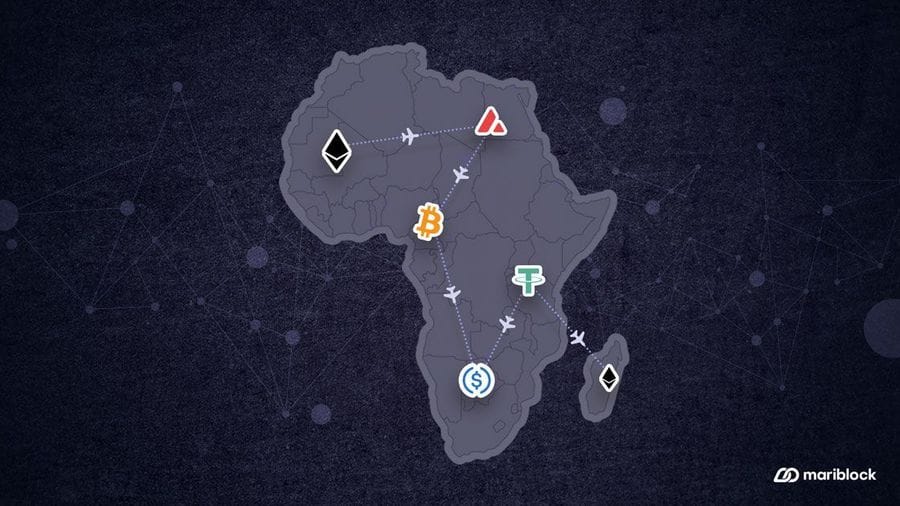
Topline: Nigeria is the most crypto-interested country in Africa, with 66.8% of the continent’s total crypto interest, according to a study by cryptocurrency research firm CoinGecko. This is nearly eight times as much as the next country on the list. (Details)
- Other African countries, including South Africa, Morocco, Ghana, Egypt and Ivory Coast, have only contributed to a smaller extent. They represent a combined 23.8% of the continent’s interest in crypto.
- In addition, 13 countries had no share in crypto interest across Africa, the survey stated.
Background: Nigeria has frequently featured in other global top rankings, with a strong interest in specific digital currencies.
On more African regulatory updates

Mariblock
Topline: Africa’s crypto policy scene is seeing increased activities, with the latest developments coming out of Ghana, South Africa and Uganda.
Uganda’s parliament is working on a bill to regulate digital assets and make legal provisions for tokenization in an amendment to the Capital Markets Authority Bill. (Details)
- Background: The Bank of Uganda reiterated its anti-crypto stance in an April 2021 circular, banning financial service providers from facilitating crypto-related transactions or risk their licenses being revoked.
- However, in what appeared to be a softening stance, the bank issued another circular expressing its willingness to test some crypto business models under its fintech innovative financial solutions regulatory sandbox.
The South African Financial Sector Conduct Authority (FSCA) is asking all cryptocurrency exchanges operating in South Africa to obtain a license by the end of the year. (Details)
- FSCA Commissioner Unathi Kamlana said in an interview that the agency had received a few license applications since its recent opening and expects more before the November 30 deadline.
- Kamlana warned that crypto exchanges that continue to operate without a license after the deadline will face enforcement actions, including fines or the closure of such firms.
- Essential background: In October 2022, the FSCA declared crypto as a financial product in South Africa. It marked a new phase in regulating the crypto market, making it easier for authorities to monitor the industry and protect consumers.
However, in Ghana, it’s pretty much a non-update.
- Dr. Mohammed Amin Adam, the minister of state at Ghana’s finance ministry, reiterated the ban on using cryptocurrencies in all financial transactions, stressing that all financial institutions in the country have been instructed to avoid engaging in any crypto-related activities. (Details)
- Before now: In April 2022, the central bank warned banks and other financial institutions about the risks associated with cryptocurrency trading and other unregulated investment schemes.
INTERVIEW: Crypto gaming is not dead; the previous models were just flawed, MVM CEO says.
Design by Ifeoluwa Awowoye for Mariblock.
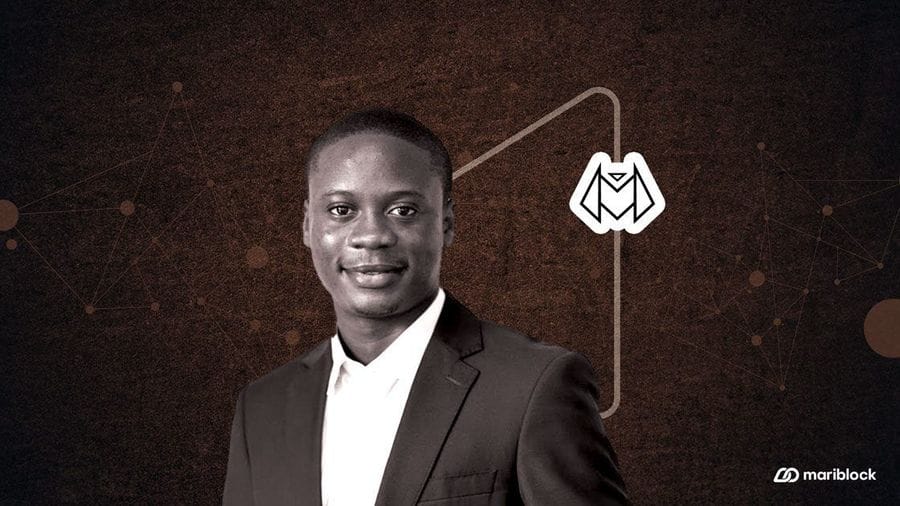
Topline: Yemi Johnson, the recently-appointed CEO of Nestcoin’s spin-off company Metaverse Magna, believes there remains a future of crypto gaming despite the original play-to-earn (P2E) model faltering.
- In an interview with our lead editor, he shared his perspective on how the P2E models popularized by global projects like Axie Infinity were flawed and built with a poor understanding of the nature and needs of the market. (Watch the interview)
What he said: “For us … the major takeaway was that those games were not fun. And if you look at the gaming industry, I think about 55% of the market [plays] casual games. And for many Africans …. their first intro to games were casual games because a console is just too expensive to afford.”
Zoom out: Johnson’s sentiment on the Web3 games being boring mirrors that of Shuji Utsumi, a co-chief operating officer at the global gaming powerhouse Sega.
- Utsumi told Bloomberg that P2E games are “boring” and pointless.
- However, while Metaverse Magna is doubling down on Web3 gaming, Sega is pulling back. (Details)
Catch up
🌍 ‘Crypto could revolutionize finance’ BlackRock CEO (Read here)
🌍 Ripple Labs exploring real-world use cases of CBDCs and stablecoins (Read here)
🌍 BIS highlights cybersecurity risks and proffers a framework for “secure” CBDC systems (Read here)
🇿🇦 Africa’s biggest bank wants to be ‘fast follower’ on crypto (Bloomberg)
🇺🇬 Uganda becomes Kenya’s fastest-growing source of diaspora remittance (Read here)
🇳🇬 Diaspora remittances can now be received in naira — CBN (Read here)
A tiny ask 🙏🏾
If you read this all the way to the end, you’re an MVP.
We’d love to hear from you.
What are your thoughts about this newsletter?
What are we doing well — and what should we improve on?
Hit the reply button, and let’s talk — even if it’s a reaction to any of the stories covered here.
I look forward to hearing from you.
That’s it for this week.
See you next week.
Cheers,
Ogechi.