

Namibia passes law to regulate cryptocurrencies
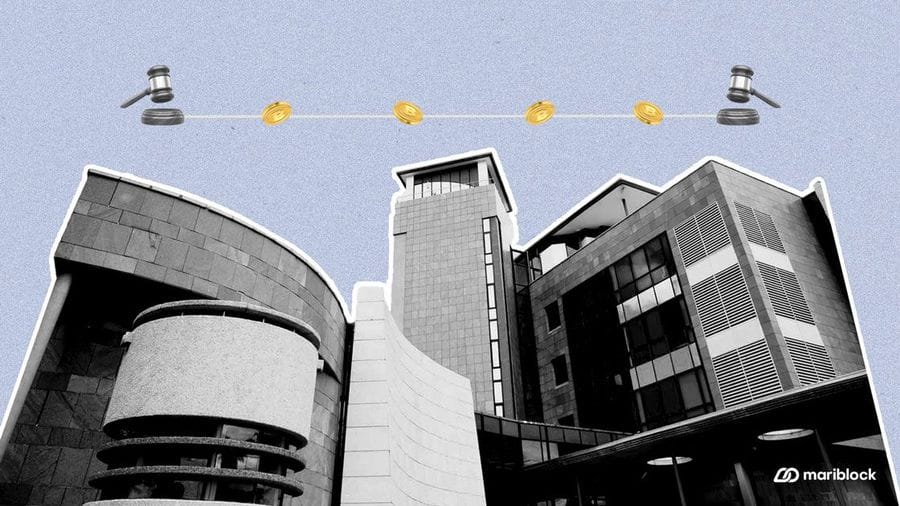
Photo credit: Design by Ifeoluwa Awowoye for Mariblock
Topline: The Namibian National Assembly recently passed a bill to regulate digital assets and service providers in the country. (Details)
Fast facts: According to Iipumbu Shiimi, Namibia’s minister of finance and public enterprises, the law was essential to protect the interests of Namibians.
- The law would also combat the abuse of virtual assets and guard against money laundering.
- In addition, a governing body would be established to oversee and license the activities of virtual assets service providers in the country. Defaulting providers could face up to 10 million Namibian dollars in fines and a 10-year prison sentence.
The tilt: Despite these regulations, the Bank of Namibia maintains that cryptocurrencies have no legal tender status in the country.
- Kazembire Zemburuka, the director of strategic communications and international relations at the Bank of Namibia, admitted that while virtual assets could improve financial inclusion and cross-border payments, individuals who own and transact with them do so at their own risk.
- He added that until the assets are better managed and regulated, the bank will not accept them as legal tender in the country.
Key background: In 2018, the Bank of Namibia announced that it was firmly against the use of cryptocurrencies as a method of payment for goods and services.
- It further stated that cryptocurrencies were without legal tender status in the country.
- The bank also announced last year that bitcoin could be accepted and used as a form of payment, stating that accepting payments in bitcoin was at the discretion of the merchant.
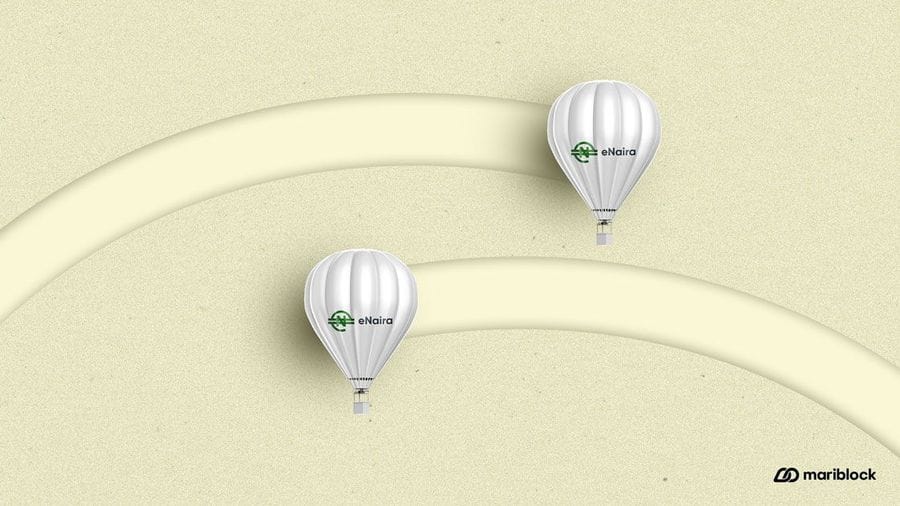
The eNaira can now be used for remittances — CBN
Design by Ifeoluwa Awowoye for Mariblock.
Topline: The Central Bank of Nigeria (CBN) has announced that individuals in the Nigerian diaspora can now send money into the country using its central bank digital currency (CBDC) — the eNaira. (Details)
Driving the news: This is the latest of the CBN’s attempts to drive the adoption of the eNaira. The CBN seeks to provide an easy alternative for Nigerians to receive remittances.
- The sender initiates a transaction by choosing a preferred International Money Transfer Operator (IMTO) and provides the IMTO with the beneficiary’s foreign currency payment and eNaira wallet address.
- After receiving the fund from the sender, IMTO proceeds to deposit the equivalent amount of eNaira into the beneficiary’s eNaira wallet.
Zoom out: There have been calls for the CBN to make the eNaira a possible option for cross-border remittance payments.
Libyan authorities clamp down on bitcoin mines

Design by Ifeoluwa Awowoye for Mariblock.
Topline: Libyan authorities recently busted the activities of illegal bitcoin mines in the country, leading to the closure of at least four mines and the arrest of 60 Chinese nationals. (Details)
Dive in: The attorney general’s office explained that five mines were found in Libya’s northwestern region.
Why this matters: Bitcoin mining is officially illegal in Libya, and the government has attributed it to the frequent power cuts in the country.
- Despite the ban, bitcoin mining is popular in the country. A report in 2021 stated that Libya accounted for 0.6% of worldwide bitcoin mining operations.
- Libya is attractive for bitcoin mining due to its cheap electricity costs. Electricity is reportedly charged at $0.004 per kWh, 40 times cheaper than the average rate in the U.S.
Catch up
🇿🇲 IMF set to decide on Zambia’s extended credit facility. (Read here)
🇬🇭 Institutes urge Ghana’s government to utilize blockchain technology (Read here)
🌍 Kenya, Nigeria, and South Africa are driving Africa’s Web3.0 adoption (Benjamindada.com)
🌍 Crypto offers Africans a ‘lifeline’ from inflation and corruption, say execs (Cointelegraph)
By the number

Mariblock
Why it matters: For a long time, decentralized finance (DeFi) was touted to play a part in filling the MSME funding gap, albeit with few activities.
- However, Jia’s recent fundraising is bringing life to that narrative.
- Mariblock lead editor Oluwaseun Adeyanju spoke with Jia CEO Zach Marks to learn more about the product. Watch it here
A tiny ask 🙏🏾
If you read this all the way to the end, you’re an MVP.
We’d love to hear from you.
What are your thoughts about this newsletter?
What are we doing well — and what should we improve on?
Hit the reply button, and let’s talk — even if it’s a reaction to any of the stories covered here.
I look forward to hearing from you.
That’s it for this week.
See you next week.
Cheers,
Ogechi.