
 1 September 2026
Mariblock Signals
Your weekly situational intelligence on Africa’s fast-growing blockchain economy.
 Sam AdeyemoAssociate Editor, Signals
 Oluwaseun AdeyanjuEditor-in-Chief
First word from Oluwaseun
Welcome back.
The last time we published a newsletter, we were closing out Mariblock Weekly and preparing for the next phase of our work. We expected to return sooner, but getting ready took longer than we thought. We’re here now, with a new name and a clearer sense of what this newsletter should be.
Signals is the evolution of Mariblock Weekly, focused on the developments, patterns and ideas that matter as Africa’s digital asset economy grows more complex and consequential.
It is part of Mariblock 2.0, our broader effort to become a more useful institution for industry stakeholders. I’ve written about what that means for Mariblock and our work here.
A month ago today, we asked for your support. Thank you to everyone who has given. We still need your help to sustain this work. Independent information is expensive to produce, but essential to a healthy market.
With that, I’ll hand you over to Sam, our associate editor for Signals, who will be your guide each week.
Sam’s read of the week
It’s regulation szn! Three of this week’s developments point to the same trend that’s gathering pace. Cryptocurrency regulation is taking shape across Africa. Nigeria is tightening its rules, Ghana is preparing to introduce a formal legal framework and Mauritius is turning its attention to stablecoins.
In the nearly four years that I’ve been covering the African blockchain market, I can’t remember any one week with this many material regulatory developments. Tellingly, that was pretty much August’s prevailing theme, as you’ll see in the Snapchart section below.
The topline is that crypto is now a reality African nations are choosing to regulate. The direction of travel is clear enough; what is less settled is where each country intends to take it. So far, many of the rules emerging across the continent are proving unfriendly to startups.
 01— NigeriaPOSTURE
Nigeria’s SEC proposes stricter rules for digital assets firms
Ten days ago, Nigeria’s Securities and Exchange Commission published a draft framework for regulating digital assets and their service providers. (Details)
What stands out: the SEC is proposing tougher rules for digital asset companies, with new requirements covering stablecoins, licensing and minimum capital requirements.
- Foreign-currency stablecoins would require SEC approval before they can be listed or held by consumers, while exchanges and custodians would need at least ₦2 billion in capital.
- The rules could raise the cost of operating legally and concentrate the licensed market among larger players, while potentially pushing some activity back toward P2P channels. The SEC is accepting industry comments until Sept. 3.
 2 — GhanaPOSTURE
Ghana tests tokenized gold in expanded crypto sandbox
Ghana’s Securities and Exchange Commission (SEC) has added nine more companies to its regulatory sandbox, bringing the total number of participants to 20. (Details)
- Notable additions include Yellow Card, Ghana Commodity Exchange (GCX), the state-backed marketplace for agricultural commodities, and Ghana Gold Board (GoldBod), the country’s gold-buying agency.
The big picture: The more curious part of the story may be what Ghana is trying to do with digital assets.
- Ghana’s sandbox is the only African crypto sandbox we have seen to include state-backed institutions.
- GoldBod is testing tokenized-gold custody, while GCX is participating as a virtual asset exchange for commodities. The two are already working together on Ghana’s gold market.
Go deeper: GoldBod, created in 2025 to formalize Ghana’s artisanal gold trade, has become central to the country’s FX strategy.
- The Bank of Ghana financed its gold purchases until March. GoldBod now relies on commercial banks and gold offtakers.
- But its new funding model is under pressure with recent reports of delayed supplier payments.
Watch out: Tokenized gold could give GoldBod another funding channel and access to capital beyond Ghana. GCX could extend the model to other commodities.
 03 — MauritiusPosture
 Mauritius tightens stablecoin rules as global regulatory pressure builds
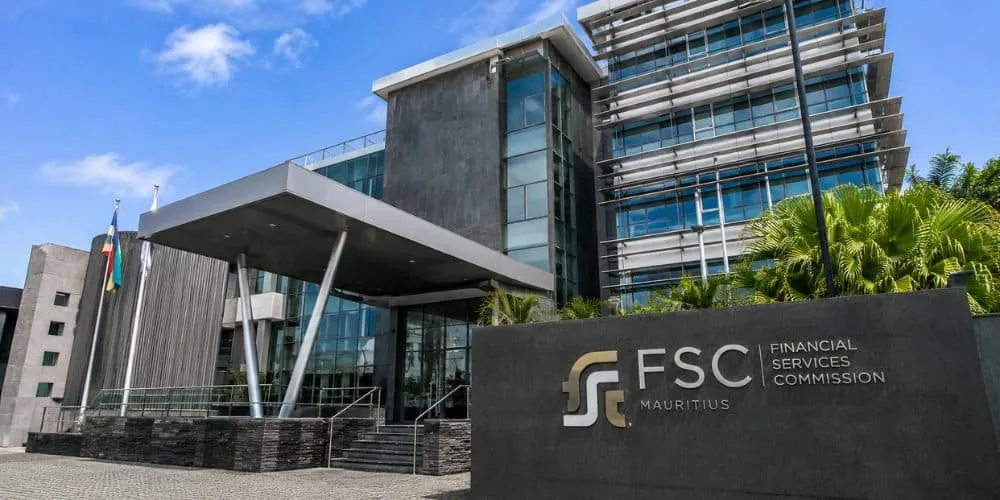
Mauritius has published guidelines for the issuance, listing, and trading of stablecoins, thereby officially bringing stablecoins into Mauritius’ virtual asset regime.
Go deeper
- The country wants only licensed stablecoin issuers with a minimum capital of MUR5 million (about $107,000) or 50% of their annual operating expenses.
- They must also maintain reserves sufficient to cover the full value of stablecoins in circulation.
- Mauritius has completely shut the door against algorithmic and yield-bearing stablecoins.
Behind the scenes
- The IMF, whose assessments can often influence policies, had warned the country earlier this year that using stablecoins to move money outside regulated rails could threaten Mauritius’ financial stability.
- The Financial Action Task Force (FATF)’s revision of Recommendation 15 has also been a major driver of this push, with many countries working to avoid grey- and blacklisting by the watchdog.
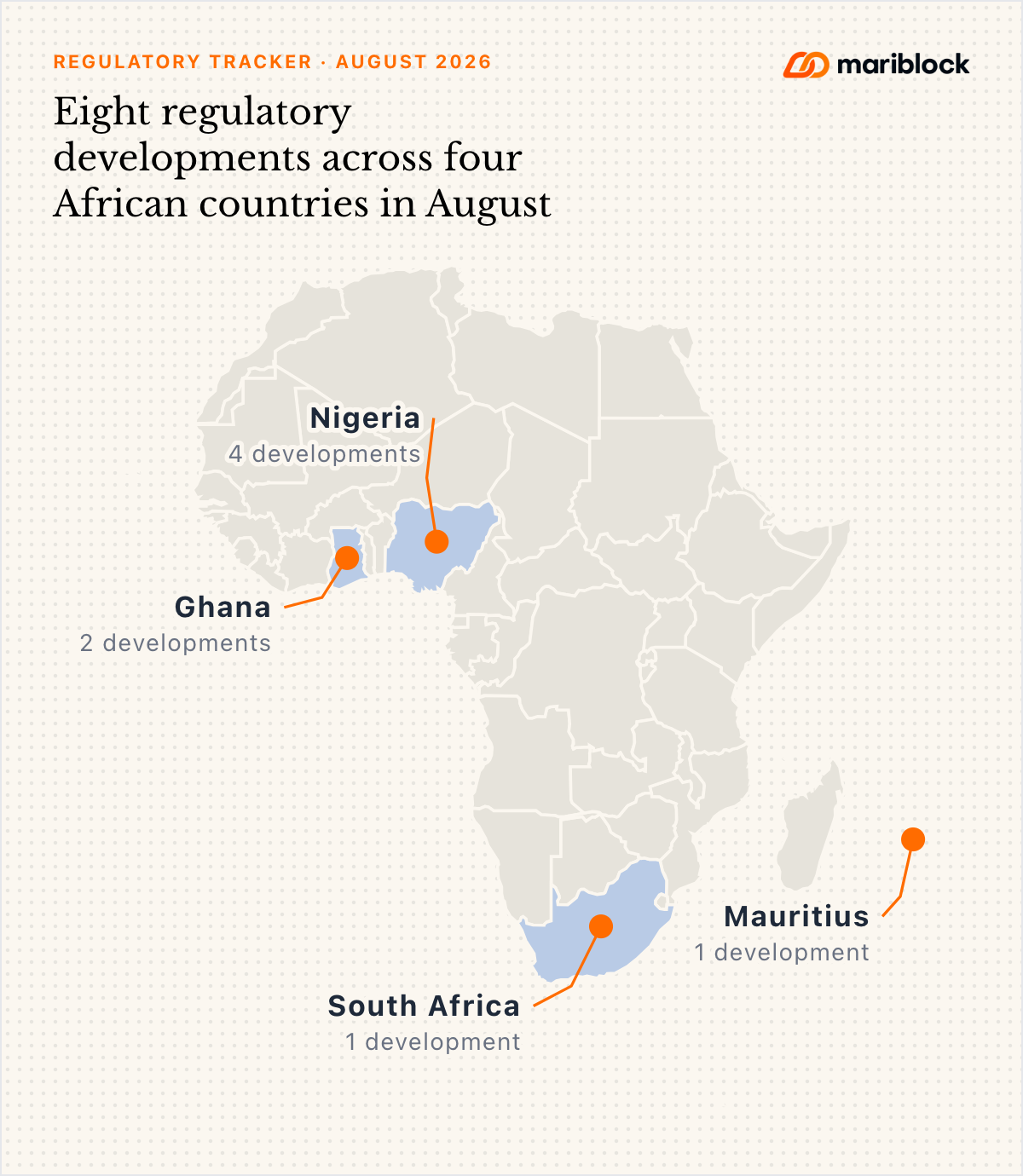
- SARB and Treasury publish draft cross-border crypto rules (Aug. 3)
- Nigeria’s revenue agency releases guidelines on virtual assets taxation (Aug. 3)
- CBN opens Cohort II of regulatory sandbox, targets VASPs. (Aug. 12)
- Nigeria’s SEC admits three more VASPs into ARIP (Aug. 13)
- Mauritius’ FSC announces guidance notes on stablecoins (Aug. 13)
- Ghana’s SEC expands crypto sandbox to 20 participants (Aug. 19)
- Nigeria’s SEC publishes draft rules for digital asset regulation (Aug. 20)
- Bank of Ghana inaugurates virtual assets coordinating committee (Aug. 25)
- Blockradar crosses $1 billion in transaction volume, less than two years after launch
- Stellar deepens its Africa push with CV Labs accelerator as competition for stablecoin rails grows
- Lisk shuts down blockchain, cutting off a backer of African startups
- Blockchain.com admitted to Nigeria SEC’s Accelerated Regulatory Incubation Programme
- CrissCross partners global stablecoin infrastructure company Borderless for stablecoin payments in Africa