NITDA issues warning to Nigerians about cryptocurrency giveaway scam

Add Mariblock as your preferred source to see more of our stories on Google.
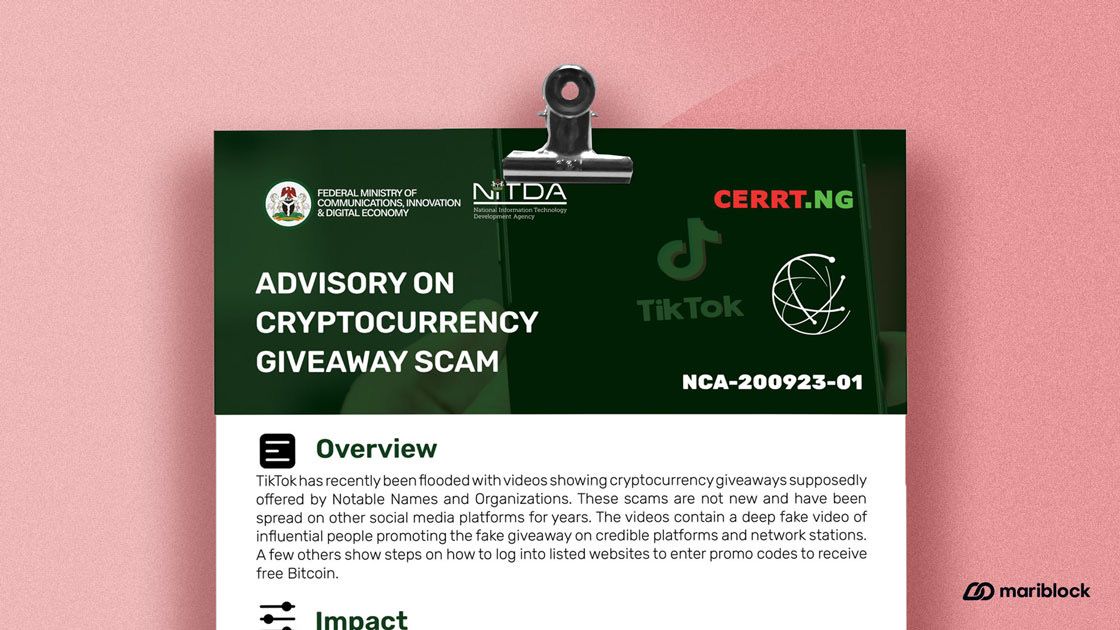
Scammers actively target victims by sharing videos of fake cryptocurrency giveaways featuring notable names and organizations.
Nigeria’s National Information Technology Development Agency (NITDA) has warned citizens to be vigilant about the cryptocurrency giveaway scam, primarily targeting social media users.
The details
According to the advisory release on Monday, September 24, the scam is mainly happening on TikTok, the popular video streaming platform.
Scammers actively target victims by sharing videos of fake cryptocurrency giveaways featuring notable names and organizations.
These videos are designed to deceive users and trick them into participating in the fake giveaway.
According to the report, these scams are not new and have been subsequent over the years on social media.
How it works
Users are encouraged to register an account on the website shown in the video and enter a promo code.
The website pretends to deposit bitcoin into the user’s wallet.
To withdraw the bitcoin, users are asked to activate their account by depositing .005 bitcoins.
The scammers then steal the deposits, and the user never receives any bitcoins.
These victims are also encouraged to enter their confidential information, which can be used to breach their legitimate cryptocurrency account.
Be smart
NITDA, the government agency respons for ICT development in Nigeria, warned about websites pretending to be Open AI, ChatGPT. These websites trick users into downloading malicious files or software.
The agency said scammers could potentially use the downloaded files to steal sensitive data like call logs, contact lists, SMS, and media files.
Zoom out
Mariblock recently reported on how some crypto scam entities are defrauding unsuspecting Kenyans and Nigerians.
These firms, which impersonate real crypto companies, ask users to deposit money to buy Bitcoin mining equipment and earn outrageous ROIs after a specific period.
This highlights that, as cryptocurrency gains increasing popularity in sub-Saharan Africa, unscrupulous actors often exploit this trend to target unsuspecting victims.
While it is commendable to witness government agencies cautioning citizens to exercise vigilance, there is a lack of clarity regarding the specific measures NITDA has implemented to safeguard citizens from such scams, beyond issuing warnings.