


Do you want to know about the latest blockchain and digital assets development in Africa? You can have this newsletter sent to your inbox every Saturday.
DeFi lending is picking up pace with Jia’s $4.3 million funding
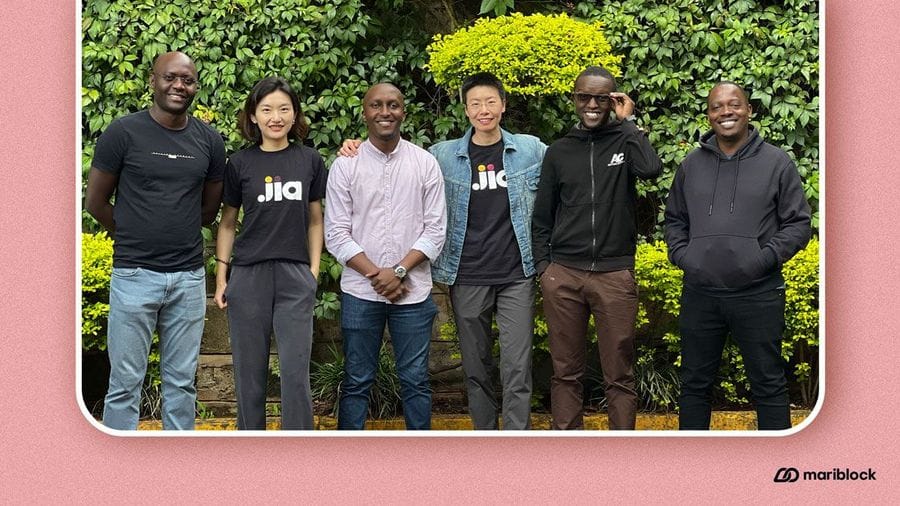
Source: Jia
Topline: Jia, a decentralized finance (DeFi) lending company, has secured $4.3 million seed funding to bring blockchain-based financing to emerging markets in Africa, the Philippines, Latin America and Asia. (Full story)
- The cryptocurrency venture firm, TCG Crypto, led the round, Jia said.
- The DeFi lending startup also secured an additional $1 million for on-chain loan liquidity.
- Jia, which already has some presence in Kenya, is looking to solidify its place in the East African country and expand to new markets in West Africa and beyond.
Be smart: Jia is now the second company to raise funding to power DeFi-based credit over the past year.
- Last year, Kenyan fintech startup Pezesha raised $11 million in pre-Series A funding for its loan marketplace.
- Cardano blockchain developer Input Output Global (IOG) and cFund — a venture fund also focused on the Cardano ecosystem — participated in the round.
- Granted, Pezesha isn’t a blockchain company. The Nairobi-based company pools funds from debt investors and loans them working capital to small and medium-scale businesses in Sub-Saharan Africa.
- But the DeFi play was clear to see.
Critical quote: Cardano co-founder, Charles Hoskinson, said of the investment:
- “I’m delighted to announce our investment in Pezesha. Facilitating the movement of capital to emerging markets to support economic growth and job creation is a core promise of blockchain and cryptocurrencies.
“Our vision is centered on using technology to make it easier for people across the globe to borrow and lend to each other in a regulated way. This investment in Pezesha is an important milestone, and we’re excited to be a part of their growth story.”
The big picture: DeFi has been touted to help bridge Africa’s funding gap, which the International Finance Corporation estimates at $416 billion annually.
- Last August, after IOG’s investment in Pezesha, I wrote: “DeFi could play a part [in filling that gap]. Its borderless nature means that geography isn’t a significant factor, if at all. Also, many DeFi loan rates are in the single digits — compared to the double-digit rates on offer in many African countries.”
Watch out: I spoke with Jia CEO Zach Marks about his company’s plans. The video will be live this week.
Busha launches crypto payment service despite category headwind
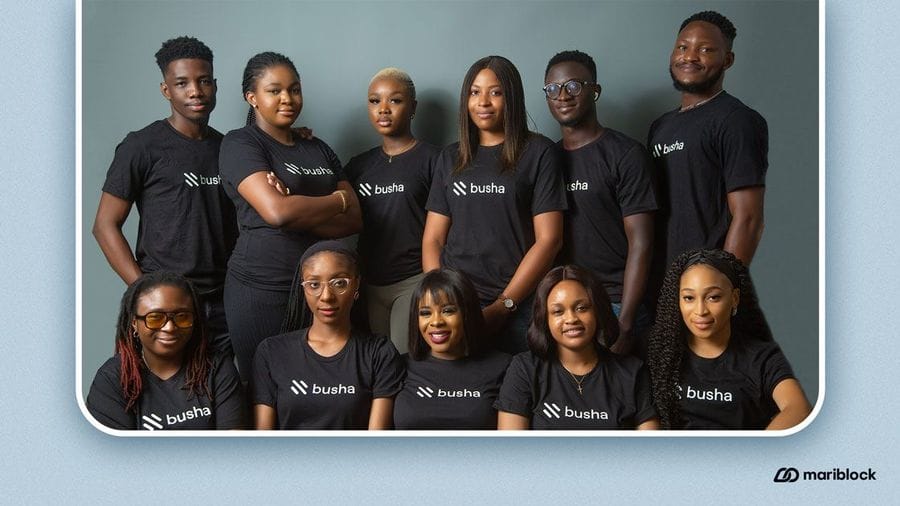
Credit: Busha
Topline: Nigerian cryptocurrency exchange Busha recently launched a service allowing businesses to accept crypto payments. The service is dubbed Busha Commerce. (Full story)
- Notably, Busha’s payment service comes just weeks after another payment company Lazerpay shuts down.
Quick fact Busha claims to offer various payment options for merchants, including stablecoins — which provide stability and reduce the risk of volatility associated with cryptocurrencies.
- Fiat currency options are also available, the company added.
Of note: Busha Commerce’s timing stands out, given the recent trends around African crypto payment companies.
- In April, cryptocurrency payment company Lazerpay said it was shutting down.
- Founder Emmanuel Njoku disclosed that the company faced challenges securing funding to sustain its operations.
- Before that, Fluidcoins, another crypto payment service, sold itself to crypto exchange Blockfinex. Techcabal reported that the company ran out of cash and struggled to raise additional capital.
Social media convo: I tweeted about Busha Commerce launching amidst struggles experienced by other crypto payment startups.
- Busha co-founder and director Olaoluwa Samuel-Biyi sent the reply below.
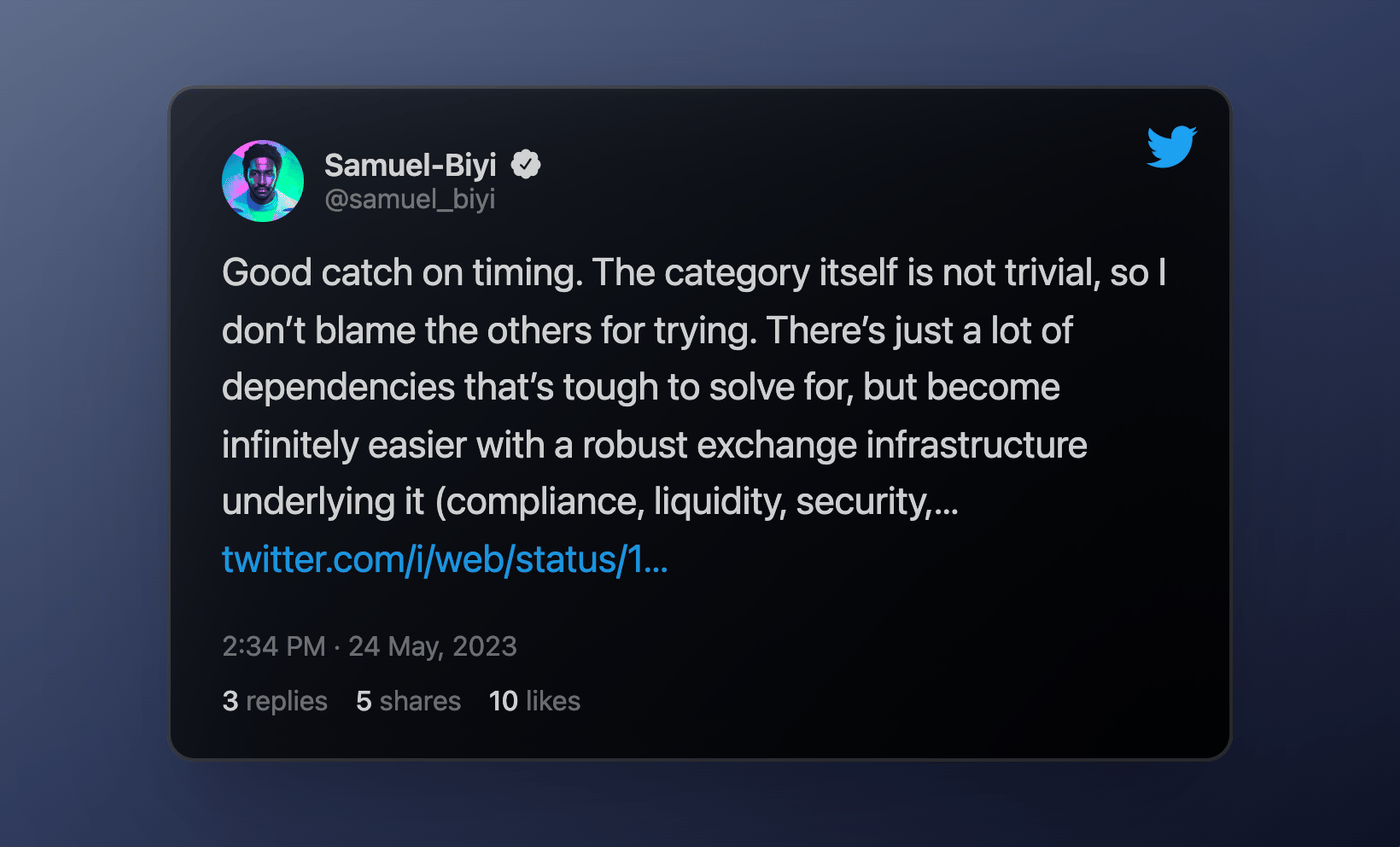
He added: “There were experiments with versions of Busha Pay, but with a lot of lessons from serving crypto-enabled payment & settlement needs for businesses (in the [billion of dollars]), it’s now clearer how to productize with seamless tech tools, in the most compliant manner.”
Background: Founded in 2019, Busha primarily operates an exchange that provides Africans with a platform to trade cryptocurrencies.
- Busha raised a $4.2 million seed round in 2021 to expand its product offerings. It also planned to extend operations across Africa.
Sub-Saharan African currencies have plunged 8% in one year
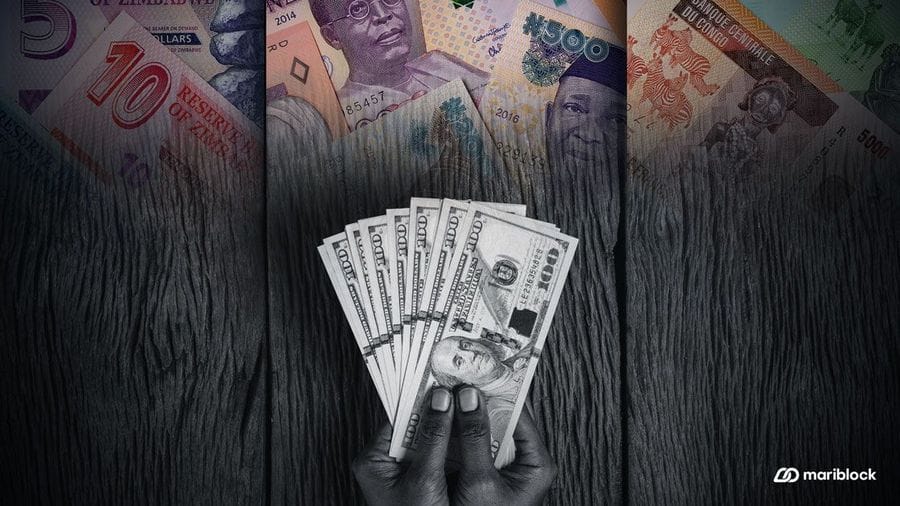
Design by Ifeoluwa Awowoye for Mariblock
Topline: Sub-Saharan African (SSA) countries have depreciated against the United States dollar (USD) by an average of 8% since January 2022, according to the global lender International Monetary Fund. (Full story)
- Consequently, inflationary pressures across the region are higher.
What they’re saying: the global lender said:
- “Most sub-Saharan African currencies have weakened against the U.S. dollar, fanning inflationary pressures across the continent as import prices surge.
- “This, together with a growth slowdown, leaves policymakers with difficult choices as they balance keeping inflation in check with a still-fragile recovery.”
Catch up
🌍 I had an exciting chat with Chris Maurice, the CEO of the crypto exchange Yellow Card about his company’s partnership with Jack Dorsey’s Block.
- He shared his views on what it will take for crypto remittances to take off. (Watch it here)
🇬🇭 Ghana got a credit alert from the IMF.
- One of the many things I’ve learned editing Mariblock over the past year is that the International Monetary Fund (IMF) is a crucial monetary policymaker in Africa.
- Nations across the continent tend to run to the lender a lot.
- For its part, the IMF makes structural adjustment demands on how the countries run their respective monetary system before bailing them out.
- Ghana is the latest to yield. (Story here)
🇳🇬 Crypto startup Patricia said on Friday that its systems had been compromised.
- A statement from the company reads: “Not long ago, we were victims of a breach. Patricia Personal, the retail trading application, was solely affected by this breach; BTC and Naira assets were compromised.”
- The company didn’t disclose information about the amount compromised and when it happened.
- However, Techcabal reported, citing sources with knowledge of the situation, “that the incident happened in 2022 and cost the company $2 million.” (Details)
Culture hash: Crypto vs. the IMF
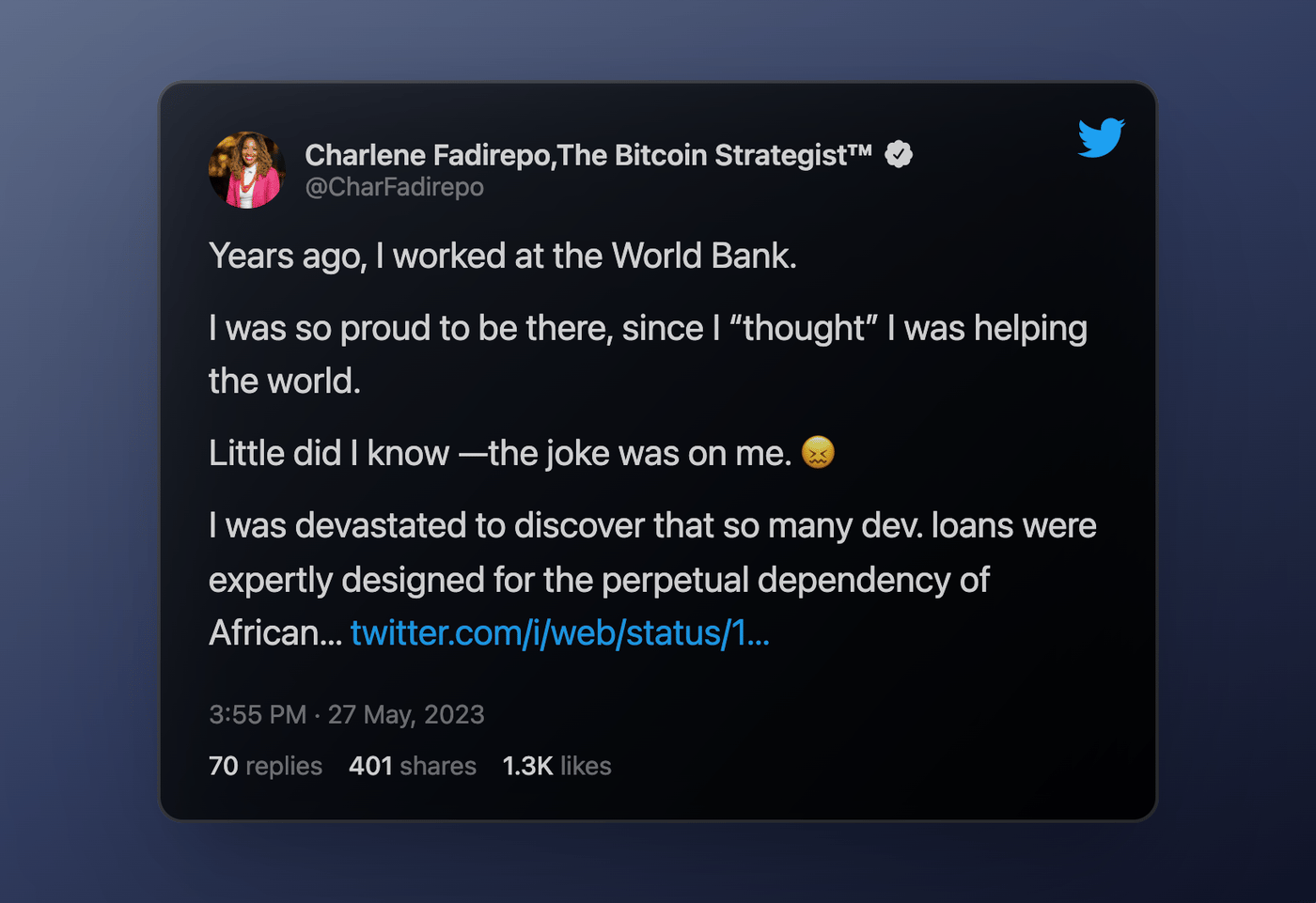
Topline: I found the tweet above as a quoted reply to another tweet from bitcoiner Alex Gladstein about his talk at the “Bitcoin 2023” conference.
- Charlene Fadirepo essentially agreed with Gladstein’s views that international lenders of last resort, including the IMF and World Bank, give predatory loans to developing countries.
- Gladstein describes how these international lenders make structural adjustment demands (loan terms) that leave developing countries poorer and dependent on the West.
- Typical IMF demands include currency devaluation, removal of subsidies on food and energy, higher interest rates, increased taxes, restriction of government spending, etc.
Telling quote: These demands are “so rich because Britain right now has a cap to energy prices. [Clearly] rich countries would never accept the structural adjustments that they impose on poor countries,” Gladstein said
- He added that these demands ultimately ensure that Western countries are able to get cheap labor and resources from the developing world.
- “Our success in the West — yes, it’s because of free speech [etc.] We need to recognize that it’s also because we stole a lot of labor and resources from poor countries for a very long time. And people don’t like to acknowledge that ... it’s a very difficult thing to acknowledge.”
Of note: One of the reasons we have the “State of Fiat” coverage is that we believe it’s essential for everyone to be aware of the weighty choices African governments make regarding their money — so that they can make intelligent choices.
- The brutal truth is that African governments need to make difficult decisions to break free from what Gladstein describes as debt colonialism.
The crypto upshot: Cryptocurrencies now provide Africans and other Global South citizens a way to escape the squeeze that follows the so-called structural adjustments.
- Yes, citizens cannot stop debt colonialism individually. But they can now look out for themselves, to some extent, by accumulating assets resistant to poor monetary choices.
You can watch the full talk on YouTube.
A tiny ask 🙏🏾
If you read this all the way to the end, you’re an MVP.
I’d love to hear from you.
What are your thoughts about this newsletter?
What are we doing well — and what should we improve on?
Hit the reply button, and let’s talk — even if it’s a reaction to any of the stories covered here.
I look forward to hearing from you.
That’s it for this week.
See you next week.
Cheers,
Oluwaseun.