
 9 September 2026
Mariblock Signals
Your weekly situational intelligence on Africa’s fast-growing blockchain economy.
 Sam AdeyemoAssociate Editor, Signals
 Oluwaseun AdeyanjuEditor-in-Chief
First word from Oluwaseun
Put correspondent banking and stablecoins in the same sentence, and the conclusion seems obvious: one should eventually replace the other.
Correspondent banking is the chain of intermediary accounts that banks depend on to move dollars across borders. The BIS says those relationships have been declining for over a decade, with emerging markets losing the most. Blockchain, in theory, is a disintermediation tool.
Yet Anchorage, a U.S. federally chartered crypto bank, is hiring in Africa to sell its stablecoin correspondent banking solution.
It is a useful marker of where crypto is headed as it becomes institutionalized — being sandwiched into familiar experiences, even when those experiences are inefficient or expensive.
Support Mariblock
If you find this work useful, consider supporting Mariblock. Independent reporting takes resources, and every contribution helps us keep doing it.
 01 — SOUTH AFRICAEmerging
 Standard Bank joins 21-bank group building a dollar stablecoin for 2027
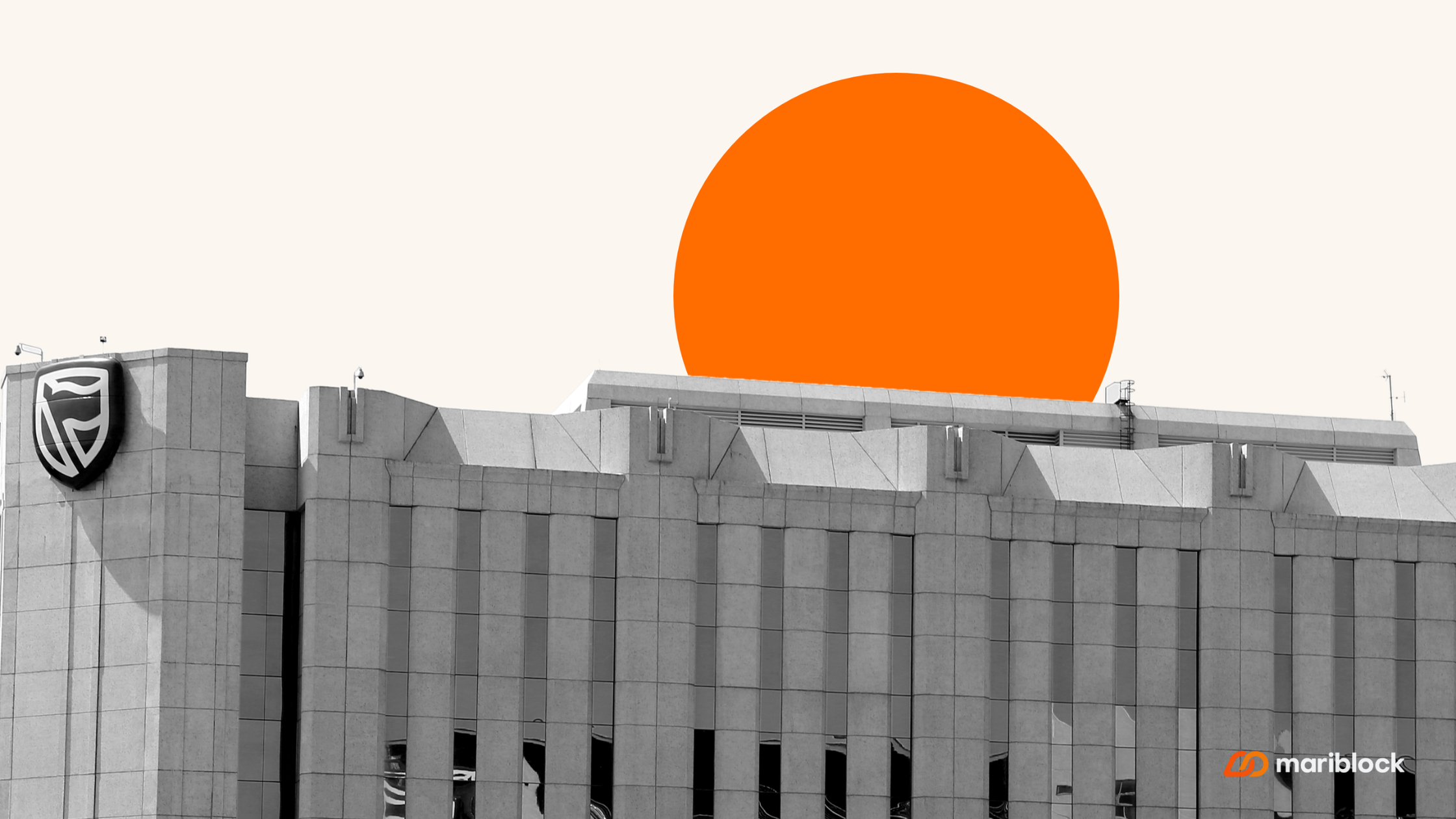
Standard Bank, Africa's largest lender by assets, has joined 20 international banks and asset managers in committing to establish a company that will issue a USD-denominated stablecoin. (Details)
The details: The company is expected to be set up in the second half of 2026, with the token targeted for launch in the first half of 2027. It will be fully reserve-backed and built to comply with the U.S. GENIUS Act and the EU's MiCA.
- Standard Bank is the only African member. The others include Bank of America, Goldman Sachs, Crédit Agricole and MUFG.
Why it matters: This is the first time an African bank has committed to issuing a dollar stablecoin, and it comes from the one operating in 20 markets on the continent.
- Standard Bank said in 2023 it would be a "fast follower" on crypto.
 02 —AFRICATrend
Daya taps Stripe-backed Tempo to move stablecoins for African businesses
Digital assets company Daya has integrated Tempo, the Stripe- and Paradigm-backed payments blockchain, as a protocol for moving stablecoins for African businesses. (Details)
- It is Daya's second chain partnership this year, after Aptos in June.
Why it matters: African crypto companies are increasingly taking one of two paths as retail trading margins thin and demand grows for stablecoin-fiat settlement.
- Some are moving entirely into business infrastructure. Yellow Card shut its retail app in January and now focuses on B2B payments.
- Others are broadening beyond trading, building products across remittances, payments and prediction markets while retaining their core businesses. Daya, Roqqu, VALR, Busha and Quidax are examples of this approach.
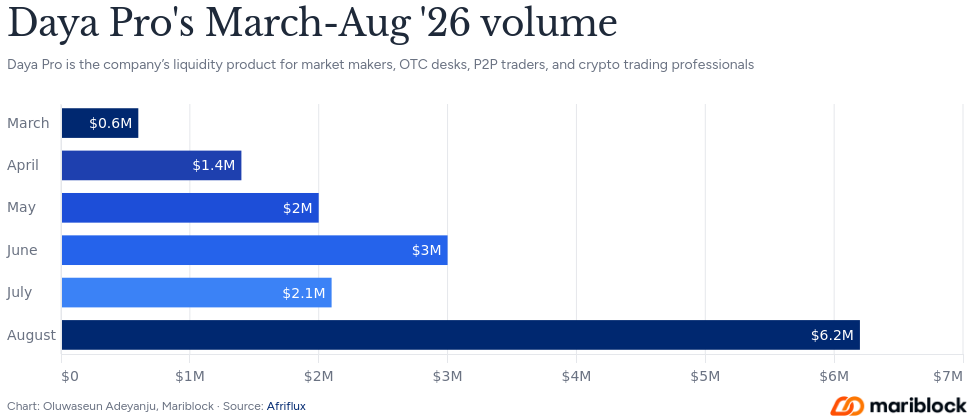
- Daya’s professional liquidity product processed $6.2 million in August, up from $600,000 in March.
 03 — NIGERIATREND
Celo adds cNGN liquidity on Uniswap for broader access to onchain FX
Ethereum layer-2 blockchain network Celo has launched a cNGN-USDT liquidity pool on Uniswap, becoming the third network after Binance and Base to do so. (Details)
By the numbers: The pool has a total value locked of $180,700 as of writing.
The big picture: Networks are increasingly competing for a role in Africa’s growing stablecoin economy.
- There are now 4.4 billion cNGN tokens in circulation across eight networks, including Binance Chain, Solana, Base and Ethereum, according to cNGN.
- Celo joined the cNGN ecosystem last month. Its Uniswap pool gives the naira stablecoin another source of onchain liquidity and makes it accessible to a wider pool of traders.
- Stellar, Tempo and Polygon have also partnered with African businesses over the past year to support stablecoin payment infrastructure.